
Marketer Spotlight: Behind the Craft with Suhayl Limbada, CMO of KFC Thailand
When KFC Thailand’s ‘Let There Be Cake’ picked up a Cannes Gold Lion for Film, it was a massive win for the South African creative and production team behind the work and proves what’s possible when everyone is focused on one thing: making the best possible piece of work. From marketer to agency to production, every decision pushed the idea further and raised the bar on execution. At the centre of it is Market Lead & CMO at KFC Thailand Suhayl Limbada, a South African marketer with an instinct for strong ideas and a respect for the people who bring them to life.
In collaboration with South African agency Bananas, production company Carbon Films, and director Bruno Bossi, Suhayl helped transform a surreal, cake-fuelled apocalypse into a commercial that became a globally recognised example of standout, craft-led advertising.
In this Spotlight, Suhayl unpacks his journey and shares his philosophy on creativity, leadership, and why backing bold work, even the kind that might get you fired, is always worth it when it’s in service of great craft.
‘Suhayl doesn’t pay lip service to pushing creative limits, he lives it everyday.‘
– Justin Gomes, Co-Founder & CCO of Bananas
Q: What’s been your path to KFC Thailand? How did you find yourself here, and what have been some key moments along the way?
Suhayl: I’d say my journey has not been a conventional one. I started out in the UK working in all sorts including door-to-door sales, call centres and even office cleaning jobs. That gave me mental toughness. I got my first corporate break back in South Africa with Cadbury as a Trainee. This was a school of life in terms of being a good marketer, especially when it comes to agency, client relationships under the mentorship of Geoff Whyte and Mike Middleton.
My journey since, like most great things in life, wasn’t linear but rather was layered, topsy-turvy, and full of surprises. After working on awesome brands like Cadbury and Stimorol, I challenged myself with a regional category role before jumping into an even steeper learning curve as Market Lead/GM for Cadbury Indian Ocean Islands. Here I learnt to learn quickly as the learning curve was a vertical line! After a few ‘tough’ years of tropical island life, the chicken was calling and I joined KFC, starting out in New Africa Markets in 2015. Painting the African continent red taught me even more about the art of entrepreneurship in Marketing, which ultimately paid off when our World Cup ‘Neymar’ campaign went viral globally. This led to a stint in South Africa as Marketing Director at KFC where I had the privilege to be part of an incredible team that turned around the South African business. Our marketing had to be smart, sharp, and scrappy to earn attention. It taught me to never wait for the perfect brief; you just make the magic with what you have.
From there, I moved across to KFC Thailand as CMO. Accepting a job in a country I had never visited talks to the unconventional nature of my career because what attracted me was again the steepness of the learning curve, different culture, different tempo, same obsession with unlocking growth through creativity and people. The real turning point for me was realising that leadership isn’t about knowing all the answers, it’s about creating the kind of environment where the best ideas can rise. Coming to Thailand was a leap, but a purposeful one. It’s where I’ve had to combine grit with grace, and lead transformation from the inside out. So the key moment? Every single day. I raise my hand. I back myself. And I show up for the people and the work. Simple as that.
Q: You’ve helped lead KFC Thailand’s transformation into a bold, creatively fearless brand, from wild surrealism like ‘Let There Be Cake’ to spicy stunt work like ‘Buldak Dunked Wings’. How do you navigate that creative range while staying true to the KFC voice?
Suhayl: Great question! I think the first mistake marketers make is thinking creativity and consistency are enemies. They’re not, they’re more like dance partners. Creativity leads with flair and magic, consistency keeps time and makes sure your brand doesn’t fall off the dance floor. It’s tough to achieve but man, it’s worth pursuing this marriage.
KFC’s voice is bold, cheeky, but full of heart. For me, it’s the kind of brand that can wink at the world daily (brand) while still making your taste buds crave that finger-lickin’ good taste (sales). Whether we’re transforming Bangkok into a cake apocalypse or getting into a real-life scrap with an influencer, we always ask ourselves, does this feel unmistakably KFC? Navigating the range comes down to being clear on the soul of the brand, and then giving the work (and creatives) permission to have fun and be surprising. We don’t chase imitation. We single-mindedly build feeling. That’s what sticks.
Q: The Thailand work feels cinematic, visually confident, and considered. What role does craft play in your decision-making when backing a campaign?
Suhayl: As a marketer, you have to first appreciate the concept of craft for it to truly show up in your work. For me, craft is where respect lives. Respect for the incredible talent in our industry, be it a Director hellbent on the finer details (cough cough Bruno…) or a copywriter spending hours and hours on refining a script. Choice of DOP, choice of wardrobe artists…I could go on and on. Real humans pouring heart and soul into your brand’s work. You have to respect that. Also, if you truly appreciate the concept of craft, you’re signalling to your audience that their attention is worth something. It signals that you’re not just interrupting their feed but you care enough to offer them something worthy of their time. So craft isn’t about making things pretty. It’s about precision. Emotional precision. Tonal precision. Visual clarity. When the world is flooded with sameness, polish becomes an underrated weapon. I learnt from Geoff Whyte to sweat every frame (iykyk), not because we’re perfectionists (ok, maybe we are) but we also want resonance. We want people to feel something in their hearts. And truthfully, I back work that looks like it’s deserving enough of the people behind it and the people we’re making it for. It’s all about respect. That’s what makes it special.
Q: What’s your thinking around distinctiveness and long-term brand building, especially in a category like fast food?
Suhayl: I’d say beyond QSR (Quick Service Restaurant), generally, we are drowning in content right now. So, we can choose to simply keep up with volume of content or we can choose to build a brand that lasts. The latter takes stamina, courage and deep intentionality to block making crap work for the sake of making work. Simply speaking, it’s easy to launch just another promo (regurgitate the brief anyone?) It’s significantly harder to build a brand platform.
For long-term brand building, it’s about layering meaning into memory. You remember KFC because of the crunch, our bucket, our smell, our humour. These aren’t accidents, they’re distinctive assets. And the more we use them boldly and consistently, the more they become shortcuts in the consumer’s mind.
My rule is pretty simple, if someone can take your logo off and it still feels like you, you’re building something worth keeping. If not, you’re just hitting and hoping. And advertising data now clearly shows, that is a very expensive way to build your brand.
Q: Work like ‘Let There Be Cake’ is so bold. How do you get internal alignment on work that pushes boundaries?
Suhayl: It all starts with culture. Building a culture of belief in pushing creative boundaries, not just in advertising, by the way, but across your entire organisation. There is no reason why HR teams cannot be creative as an example. To build that belief, you almost need the trust of stakeholders BEFORE you need it. Work behind the scenes to take people on the journey of understanding what brave work can do for your brand. It’s a labour of love to be honest and as a marketer, this has to come from your soul. Long before you walk into a boardroom with a wild idea, you have to have ploughed the soil and planted the seed.
And when it comes to bold work, context is everything. You cannot be bold for the sake of being bold. You do it when it serves a sharp strategic purpose. That makes it defensible. And once you can show the why you’re being bold, the wow factor becomes a lot easier to sell.
This all sounds very painful, I get that. But believe me, it is worth it. Global brands growing today all have one thing in common, they have the courage to believe in the power of bold ideas and big swings. And if you can’t build the culture of boldness, sometimes just look at your stakeholders in the eye and say, “Just trust me, it’ll be weird and it will be crazy but in the best way.” And then be hell bent on delivering. I have been willing to get fired for a bold idea my entire career (it’s now a standard requirement in our briefs, get Suhayl fired!) That’s the trick, boldness without delivery is theatre. Boldness with results is leadership.
Q: You’ve worked with South African directors (Carbon Films and director Bruno Bossi) and production companies (Bananas) while sitting in Bangkok. What makes those collaborations work and what do you think South African talent brings to the table globally?
Suhayl: South African talent brings hustle and soul. That’s the best way I can put it. As a nation, we have had to fight for our place on the world stage, so South African talent shows up ready to play and ready to push, a beautiful combination.
Working with Bruno, Carbon, and Bananas has been such a natural fit because they understand how to elevate ideas into something unforgettable, not just execute them. They’re not in it just to answer a brief. Once we have an idea we all believe in, it’s an amazing time to be part of the process because we all treat the work with genuine care and aim to nurture the idea from primary school into a grand graduation at Cannes! With Cake, we didn’t just remix a global trend. We reimagined it with heart, with humour, and with a level of cinematic ambition rarely seen in QSR advertising. And that’s a credit to everyone who touched the work not just for their skill, but for their generosity of spirit and belief in something bigger than themselves. This is what South African talent brings.
That cultural nuance, technical mastery, irreverent humour, emotional intuition and big, big spirit. At our best, we have no egos, just energy all aligned to one obsession: making something we’re proud to show the world. Plus, we always deliver with just the right amount of South African sarcasm and warmth. Which, let’s be honest, is a superpower in itself.


L to R: ‘Let There Be Cake’ wins a Cannes Lions Film Gold baby! | Carbon’s EP Kirsten Clarence, Market Lead & CMO: Suhayl Limbada, Director Bruno Bossi, Bananas Creative Director Saf Sindhi | Onstage in Cannes Saf, Suhayl, Bruno, Kirsten & Louis Ditapichai, EP of TaProd.
Q: What do you look for in a director’s treatment or approach that tells you they ‘get it’? How important is it for you to feel the director’s voice in the pitch?
Suhayl: The creatives will hate me for this but I feel the director’s voice is everything. If I can feel the director’s heartbeat in the treatment, I’m in. On the other hand, if the treatment reads like a Daily Sun article, we’ve got a problem. I want to feel the director’s curiosity, their point of view, their obsession, their craft. You can tell within the first 5 minutes if the Director genuinely has been moved by the script and if I see a straightforward regurgitation of a script, I’m out.
The best directors don’t just pitch the idea. They pitch their relationship to it. That’s what I’m looking for, evidence that this story means something to them, that they see something the rest of us missed. And above all else, they need to elevate the work and be obsessed about it. Anyone can add a bit of production magic, but I’m looking for someone who adds soul. If the treatment feels like a love letter to the idea, we’re cooking.
Q: What does the creative process look like at KFC Thailand? Are you quite involved from brief to shoot, or do you trust your teams and step in later?
Suhayl: Creativity at KFC Thailand actually begins long before the agency sees the brief. A great friend of mine once said, “the client needs to be the first creative to touch the brief,” and that really stuck with me. It’s profound, because if the brief itself isn’t inspiring, then we’ve already lost momentum before the process begins. So I see it as my responsibility to make sure the brief is worthy of being briefed, that it’s sharp, emotionally resonant, and inspirationally delivered in a way that respects the creative minds receiving it.
I’m hands-on, but not hand-holding. I prefer to get involved early, that’s when I can set the ambition and the tone. This is probably where I add the most value to be honest. Too often, fear silently creeps into the room, on both client and agency sides. It’s my responsibility as a leader to help remove that fear and allow wild ambition to thrive. Big ideas are rare as it is, and if we are to win, we don’t need more fear in our industry, we need more trust.
I also aim to inject fun in the process. If we’re not laughing, surprising each other, or challenging ourselves along the way, chances are the work won’t spark joy out in the world either.
And yes, I challenge the creatives and my own team, not because I don’t trust them, but because I do. I know how good they are. Sometimes, you just need someone to remind you to swing bigger and dream wilder, be it in the boardroom or on set.
Q: How has working in both South Africa and Asia shaped your creative instincts? Are there lessons or perspectives from the South African market that you carry with you?
Suhayl: South Africa gave me edge. Asia gave me nuance. Together, they taught me how to think with both fire and finesse I suppose.
In South Africa, the creative bar is actually sky-high and so you have to earn every single eyeball. It’s a market built on grit, speed, and emotional truth. I learnt to move fast, better done than perfect, especially when it comes to real-time storytelling. I learnt that if you’re not connecting culturally, you’re not connecting at all, so go all in or don’t bother, because half-arsing culture gets you nowhere. And I also learnt that humour is a superpower. Every problem is an opportunity for South Africans, and if you can find a way to laugh at it, you’ve already won. I carry this glass half full mindset with me all the time.
Then you come to Asia, where creativity has its own quiet strength. It rewards thoughtfulness, structure, and respect for deeply rooted cultural codes. Here, I’ve learned the value of restraint, of nuance, of knowing when to turn the volume up respectfully and volume down so that meaning and resonance can rise up. Simply speaking, it has made me put myself in others shoes consistently and I am a better human as a result of it.
This mix, of South African boldness and Asian precision, shapes how I lead creative work today. I chase ideas that are emotionally brave, but I back them with strategic, culturally nuanced depth. I believe the best work makes you feel something first, but it should also make sense both for people and for business growth.
Q: What’s your role as a marketing leader when it comes to craft? How do you create the kind of environment where creativity thrives?
Suhayl: When it comes to craft, my role is to build a healthy respect for it. Too often, craft is the first thing sacrificed, usually because of budget pressures or simply a lack of understanding of its true potential. But I believe great marketing lives or dies in the details. So as a leader, I try to model that respect for craft in everything I do.
Craft isn’t something you learn at university, you learn it in the trenches. And yet, many marketers still see it as the agency’s responsibility alone. I couldn’t disagree more. Craft is everyone’s job. That’s why I take the time to involve my teams in the process of crafting, showing them how tiny tweaks can turn a good idea into a great one, a good execution into a great execution. It annoys the living daylights out of my team, but a necessary and ultimately fruitful annoyance.
As for the environment, my job is to set the bar extremely high, and then clear the path. Creativity thrives where people feel safe to fail, inspired to have a go, and energised to win. I protect the ideas when they’re fragile, challenge them when they’re lazy, and celebrate them loudly when they break through. And let’s not forget the power of good old fun. A team that gets on and has loads of banter makes braver, bolder work. It’s not rocket science. If we’re not having fun somewhere along the way, the audience will feel that too. Creativity should be serious business, but we shouldn’t take ourselves too seriously to be creative.
Q: What would you say to marketers who want to make more creatively brave work, but feel held back by pressures or fear of failure?
Suhayl: First and foremost, stay rooted in who you are. The world doesn’t need another version of what’s already out there, it needs your perspective, your culture, your voice. The most powerful work doesn’t come from imitation, it comes from authenticity.
Secondly, if you want creatively braver work, respect creatives and respect their process. Too often I see marketers treat agencies as suppliers. The power balance is completely one sided and I’ll say this, creatives live and breathe your brand 24 hours a day. You cannot switch off a creative mind especially when they are excited about your brand. Think about that for a moment. These are people who will obsess over YOUR brand if you give them just a little bit of freedom, a little bit of trust and a little bit of space to have fun. Creatives speak about your brand to their families. They literally know your brand better than you. If you want to champion brave work, firstly champion the humans behind it and just be kind. Be good. And I promise you, I promise you, see your brand sky rocket because it will be fuelled by passion you will not see in a corporate boardroom.
Be curious. The truth is, the best creativity is powered by one thing above all else: curiosity. It’s probably my most sought-after trait, in people, in partners, and even in the work. Curiosity leads to so many possibilities.
Obsess over craft and as a marketer get involved. Brave work is also hard work. Awards are not won by luck, they’re earned through hours of iteration, a relentless pursuit of better, and a deep respect for the discipline of those in the craft.
Finally, surround yourself with people who push you both in your organization and agency system. Make them your partner in the pursuit of braver work. It’s much easier to be braver together. Great partners will challenge your assumptions, elevate your ambitions, and refuse to settle for ‘good enough’.
As for the fear, truth is the fear never goes away. You just have to learn to dance with it.


L to R: Post-win Bruno & Saf | Kirsten, Suhayl, Bruno & Saf backstage | Suhayl and his Lion
Co-Founder & CCO of Bananas, Justin Gomes on working with Suhayl…

Justin Gomes is a leading South African creative entrepreneur and co-founder of the agency Bananas. He began his career in Cape Town before gaining international experience at TBWA Paris and Lowe New York, working on major global brands. In 2005, he co-founded the award-winning agency FoxP2, later serving as Chairman of the Creative Circle of South Africa. Known for championing bold, idea-led creativity, he launched Bananas, with Safaraaz Sindhi in 2025 – an agency built for clients willing to embrace creative risk. Under their leadership, Bananas has gained global acclaim, including awards for its standout campaign for KFC Thailand.
Justin says, “Bowie has this wonderful quote, he says, ‘If you feel safe in the area you’re working in, you’re not working in the right area.’ So we always try present something that is going to make ourselves – and by extension – the team feel uncomfortable, because that’s where the magic lies. My first ever presentation to Suhayl was ‘Let There Be Cake’ and I remember being all geared up to defend the girlfriend head cake scene because it’s quite out there. Well, not only did he approve that scene, he asked us to push things further which resulted in the pigeon poop scene. I think that speaks volumes…he doesn’t pay lip service to pushing creative limits, he lives it everyday.”
Watch the Work
KFC ‘Let There Be Cake’ was awarded IDIDTHAT’s Best in Craft in December 2024 by Executive Creative Director at TBWA Hunt Lascaris, Shane Forbes and Director at Romance, Justice Mukheli. The commercial was awarded in the category Direction to director Bruno Bossi from Carbon Films and Editing Craft to editor, Julian Redpath.
KFC ‘Let There Be Cake’ was also awarded an IDIDTHAT Craft Mention in November 2024 by Chief Creative Officer at Publicis Groupe Africa, Peter Little. The commercial was awarded in the category Sound (Final Mix Craft) to Paul Theodorou of Howard Audio.
What the judges had to say about the work…
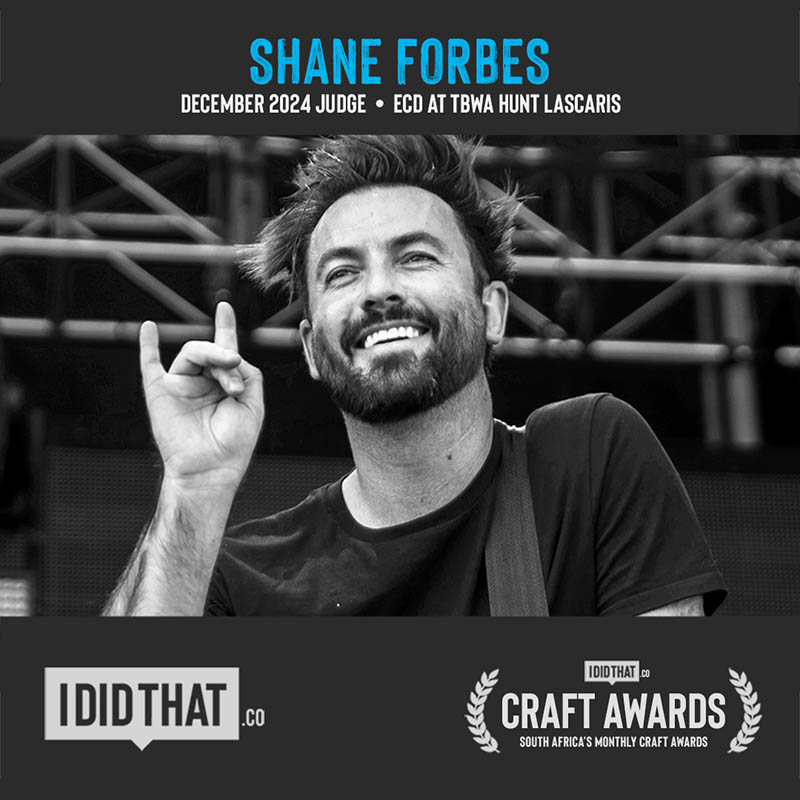
IDIDTHAT Judge’s comment: Shane Forbes, Executive Creative Director at TBWA Hunt Lascaris
“From the opening scene until the end logo, I was grinning from ear to ear. How refreshing to see a commercial this irreverent and playful, in this day and age. I can only admire and appreciate every choice made by Bruno Bossi to make this piece so memorable and fun. The cast and performances are great (and even more impressive considering the challenges of directing talent in a foreign language). The combination of in camera practical effects and VFX work together seamlessly as does the sound design and score which elevates both the tension and humour of this piece. A shout-out to the editor Julian Redpath for the pace and timing of each cut that makes this two and a half minute commercial not feel long and laborious to watch, but rather leaves you wanting more.
I’m sure there will be much talk and discussion this year about an international commercial being done by a South African agency, but hopefully this can be an inspiration to some of our local clients and a reminder to ourselves, that when you let South African creatives play. Magic can happen. Silly magic. But magic.”
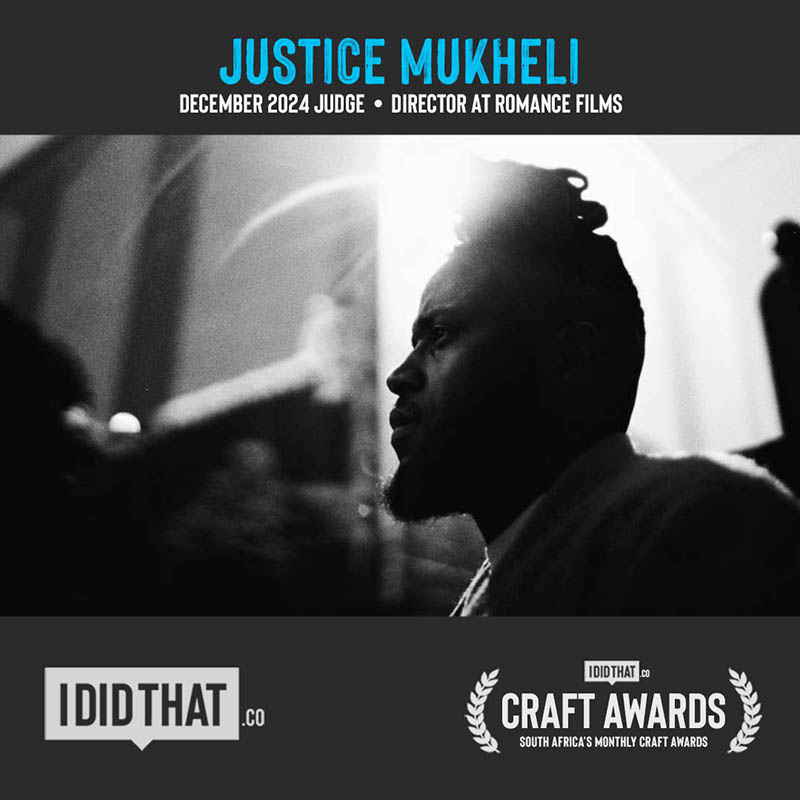
IDIDTHAT Judge’s comment: Justice Mukheli, Director at Romance Films
“Cake by Bruno Bossi is hands down my favourite. It’s such a simple idea, but it’s done so beautifully. Everything about it feels effortless and clear, and that’s what makes it so strong for me. Even with all the VFX, it doesn’t feel over-the-top or tricksy. It’s done so well that it just fits and nothing feels out of place or like it’s trying too hard. The world Bruno and his team created is amazing. The characters feel so real, even though their world is heightened. Watching it, I felt like I was right there with them, caught up in everything that was happening. It’s stylised, but in such a subtle way. It never feels like it’s trying too hard, and that’s what makes me love it. This is the kind of work that makes me wish “I did that.”
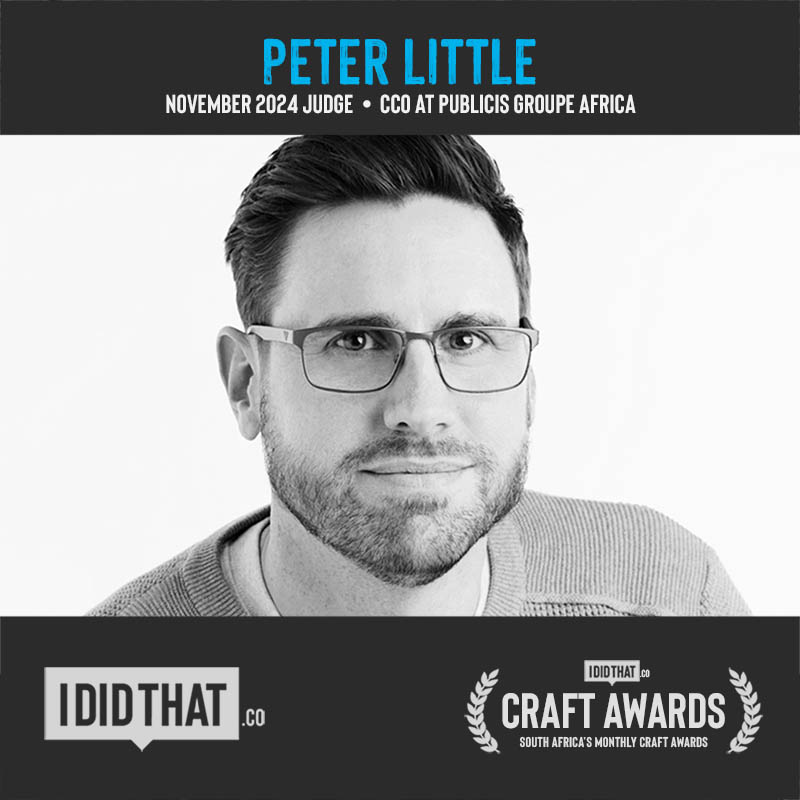
IDIDTHAT Judge’s comment: Peter Little, Chief Creative Officer at Publicis Groupe Africa
“The effortless integration of music, sound effects and live sound really elevated this super crazy-cool piece. That intricate dance of raising the tension while driving the humour throughout was masterfully curated”