
Marketer Spotlight: Star Kachisa, Head of Marketing, Spotify Sub-Saharan Africa
As Head of Marketing for Spotify Sub-Saharan Africa, Star Kachisa leads work across some of the most culturally layered markets in the world. She’s clear that the job isn’t to ‘make movies’, but to make work that earns attention, drives behaviour, and actually sells product. Spoiler alert: it’s also really good work. So we sat down with Star to find out how that work gets made, and what really matters along the way.
A recent Cannes Lions and Loeries judge, Star brings the same high standards into the jury room as she does into the work itself. She proves you can push for culturally resonant craft, stay commercially honest, and still enjoy the process. In short, she’s the kind of marketer we’d happily go to war with.
Her background in FMCG shaped how she thinks about accountability and the job-to-be-done, but craft has always mattered. Working closely with long-term agency partner Machine_, Star stays close to the work, especially at the moments where ideas are most at risk: the brief, the director’s treatment, and that point where thinking has to turn into something real. She’s clear on what she wants, quick to spot fluff, and most energised by ambition that’s there for a reason.
– Jabulani Sigege, Group ECD at Machine_
Q: Spotify is one of the most powerful cultural platforms in the world. When you think about your role in Sub-Saharan Africa, what responsibility sits heaviest with you right now?
Star: There is so much great work being done by my team that really leans into and champions local culture. From our last edition of Mother of Music in Durban last year to Greasy Tunes Cafe in Lagos to our Khuphuka Nathi campaign that was just a pure celebration of Zulu culture – we’re pushing the boundaries on creative expressions and experiences of culture.
My responsibility is to make sure that the work travels. Travels not just for the express purpose of being seen, but travels to inform and educate and ultimately inspire both within and beyond our borders.
Q: What does the creative process look like at Spotify Africa and how hands-on are you in getting the ad made?
Star: You will always find me deep in the weeds! We’re a super lean team so everyone, including myself has to be very hands-on.
We are going on 4 years of having Publicis Machine as our primary creative partner. I am a big advocate for building lasting partnerships with agencies because you start to become one seamless team. Shared goals, shared priorities and everyone’s heart is in the game.
Our creative process is something we’re continuing to optimise, honestly. We follow the traditional brief → strat. → creative ideas → production → testing process that most orgs do, but each campaign will look a little different. Sometimes we need to accelerate our go-live dates, and it forces us to move differently. Sometimes we have to be really innovative about how we develop campaigns, as they need to resonate equally across multiple markets. Sometimes the budgets are just not there, and we need to rethink what the campaign will look like.
Ultimately, our creative process tends to be optimised with each campaign.
Q: You’ve said you’re interested in work that feels global but never loses its local truth. In practice, where is that truth most at risk during the creative process?
Star: One of the first things I was taught in my first Marketing role was that the most successful global brands avoid being “mindlessly global or hopelessly local.”
That’s the line you need to be walking all the time.
I’ve found that straddling that line is most challenging during the briefing stage – you have to ensure the brief is embedded in true local insights and not just global insights cascaded down.
In the rest of the creative process, I’d say it’s pretty easy to not lose local truth (as long as your team is local…)
Q: You’ve been candid about feeling fatigued by seeing the same brands dominate awards year after year, something you touched on during a panel discussion at IDIDTHAT House during Loeries Fringe 2025. What do you think is preventing more culturally strong work from being entered or properly recognised?
Star: Oh my goodness, this is an active conversation that I’ve had with many friends and colleagues. The awards circuit requires planning, skill and budget, and often many brands lack one or the other.
Other brands just don’t see the value in investing all of that for awards.
I think a good place to start trying to change this would be active outreach to brands and marketers – get them involved as judges to start. This peels back the curtain on the awards. And honestly, the more work you get to see and the conversations you have with different people about the work, the more interested and inspired you become.
There’s no easy solution here. There are definitely some hard barriers to entry, but I think driving actual interest in participating is a good place to start. Platform more marketers in the award and industry spaces.
In addition, if we’re going to judge culture-leading work, the harsh truth is you need people in the room who understand that. You need to understand the landscapes and the communities for whom the work was created. I don’t think that’s happening right now.
Podcast: ‘Client Hot Seat: How Marketers really assess creative, briefs and production partners.’ Recorded live at IDIDTHAT House during Loeries Fringe 2025. With Bridget Harpur (VW), Grant Macpherson (KFC), Tebogo Motsepe (Nedbank) and Star Kachisa (Spotify)
Q: From briefs to boards to final sign-off, where do you find yourself most actively protecting the idea?
Star: For me, it’s when you see those first Director’s Treatments! Prior to that, the whole idea is still very much something that’s not quite tangible and still academic or theoretical. Then a Director comes on board, takes it and brings it to life (either in the best, or worst possible way). That’s when you need to have full clarity to see whether the treatment still does what the work needs to do.
Don’t be a magpie! It’s easy to get super excited and seduced by a shiny, sexy treatment – you have to keep the campaign objectives front and centre.
I had an old boss who always used to say, “We’re not in the business of making movies Star!” I think that’s still valid – your ad has a clear job-to-be-done and often hard deliverables. It’s not just telling a story for the story’s sake. We’re in the business of telling stories that ultimately drive behaviour and action.
– Star Kachisa, Head of Marketing for Spotify Sub-Saharan Africa
Q: You’ve described Spotify’s brand work as having to compete with creators themselves. How does that mindset shape the way you collaborate with agencies, production companies, and directors?
Star: I think every brand now has to compete with creators for share of engagement. It’s getting harder and harder to buy attention – your work has to earn it.
Particularly in our category, we’re selling entertainment, so ultimately, as much as the work must inform/educate, it must entertain. This thinking translates to not just the creative approach, but the media approach as well. The ambition is entertainment – not just ads, meaningful storytelling, not just information – what will the work make me do AND what will the work make me feel. That drives a lot of the conversations we’ll have, especially with Directors. It also means we will always push the craft – once we’ve found the best Director, who believes in the ambition, it’s then about taking a step back and giving them the freedom to craft it.


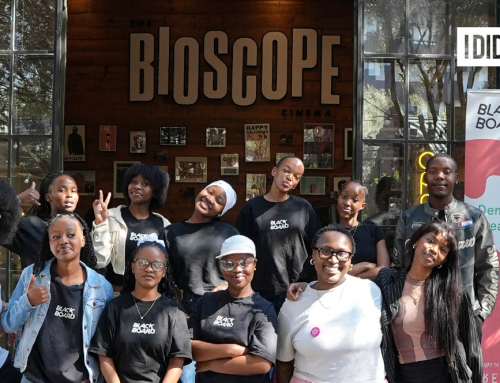
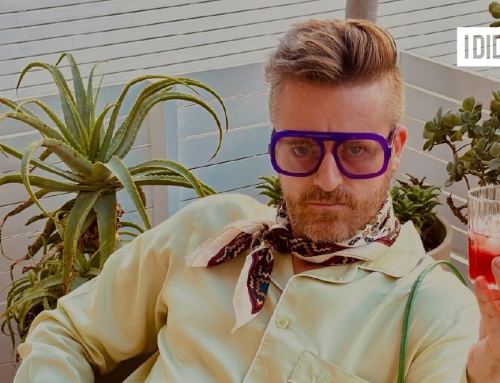
Image Left: At IDIDTHAT House 2025, a live panel discussion where four of South Africa’s top marketers shared insights on how they assess creative, briefs and production partners. Tebogo Motsepe (Executive Head: Marketing Strategy, Nedbank), Bridget Harpur (Head of Marketing, Volkswagen Group Africa), Star Kachisa (Head of Marketing, Spotify Sub-Saharan Africa) and Grant Macpherson (CMO, KFC South Africa)
Image Right: Star Kachisa talking at IDIDTHAT House panel discussion.
Q: When you’re briefing agencies or directors, what excites you immediately? And on the flip side, what raises red flags early on?
Star: I can’t say the briefing stage is particularly exciting for me, to be honest – it’s that 1st revert!
What immediately excites me is when a Director first establishes they have a clear understanding of the idea and the job-to-be-done, and then goes on to say they’ve decided to rethink/reimagine it. To me, a Director is there to dream outside our corporate box and take what’s often a hard sell and make it so much more than that. If a Director’s Treatment is something I could have envisioned myself, I worry – coz I’m not a creative!
Q: What do you look for in a director or production company when deciding who’s right for a particular piece of work, and how closely do you like to collaborate with your agency on those decisions?
Star: More often than not, the agency will share 3 recommended Directors and we’ll review 3 Treatments. There are 4 key things I am always looking for:
- Did they understand the brief and the job-to-be-done?
- Did they make me feel something? There’s nothing worse than boredom in advertising.
- Did they make me dream and make me slightly anxious or nervous about the scale / the breadth, the depth / the insanity of that dream?
- Vibe check – did we build a rapport? Did I get the sense that we won’t be fighting each other throughout the process? Do we want the same things?
Q: How important is long-term partnership versus finding the “perfect fit” for a single brief?
Star: A long-term partnership is really important with your agency, but I don’t believe that it’s critical with a Production Partner / Director. For me, Directors are chosen based on the story and whether they are the best person to tell that story.
I choose a Director based on the story, the time and the place – but also the budget! Working with some Directors will remain a dream 🙁
Q: Finally, when the impact of cultural work often outlives the campaign itself, how do you personally define success?
Star: For me, it’s when other brands or creators actively seek you out to want to partner with you. When people want to be a part of the journey you’re on, then I think you’re doing something right.
Group ECD at Machine_, Jabulani Sigege on working with Star…
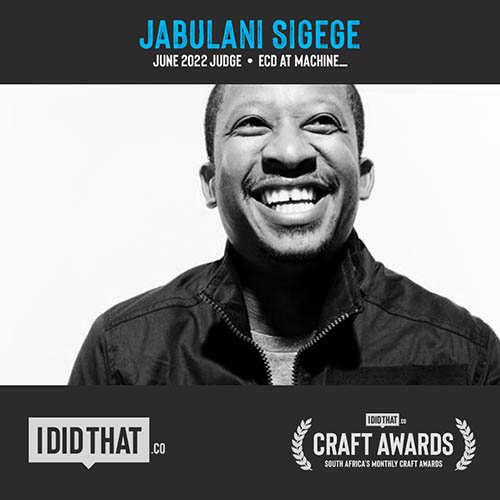
Honing his skills at some of South Africa’s most prolific agencies, Jabulani Sigege has helped shape iconic homegrown and international brands, through culturally relevant and authentic work. With a career spanning over two decades, he’s currently the Group ECD at Machine, part of Publicis Groupe Africa. His real talent is finding out what makes people tick, to increase brand love and the bottom line.
Jabulani says, “When you are working with Star, you need to have your wits about you. She’s one of the sharpest marketers I’ve ever had the pleasure of teaming up with. She asks questions and interrogates, not as an ego play, but to make the work as powerful as possible. She doesn’t want ideas for ideas’ sake or because they are “cool”. They need to be rooted in insight and culture, and what the audience needs or wants. What I appreciate most about her is that she doesn’t dictate or project what’s best for the audience, based on her own personal taste or views. She collaborates, to build the most authentic work that will resonate with people. And (wonderfully, for us) she’s just as passionate about the craft, as she is about the idea. When she believes in the work, she’ll have your back and bat for it.”
Watch the Work
Spotify ‘Spotify Radar (Thakzin)’ was awarded IDIDTHAT’s Best in Craft in October 2025 by Saf Sindhi, Founder & CCO at Bananas South Africa. The commercial was awarded in the category Direction to director Katlego Baaitse from Spitfire Films.
What the judges had to say…
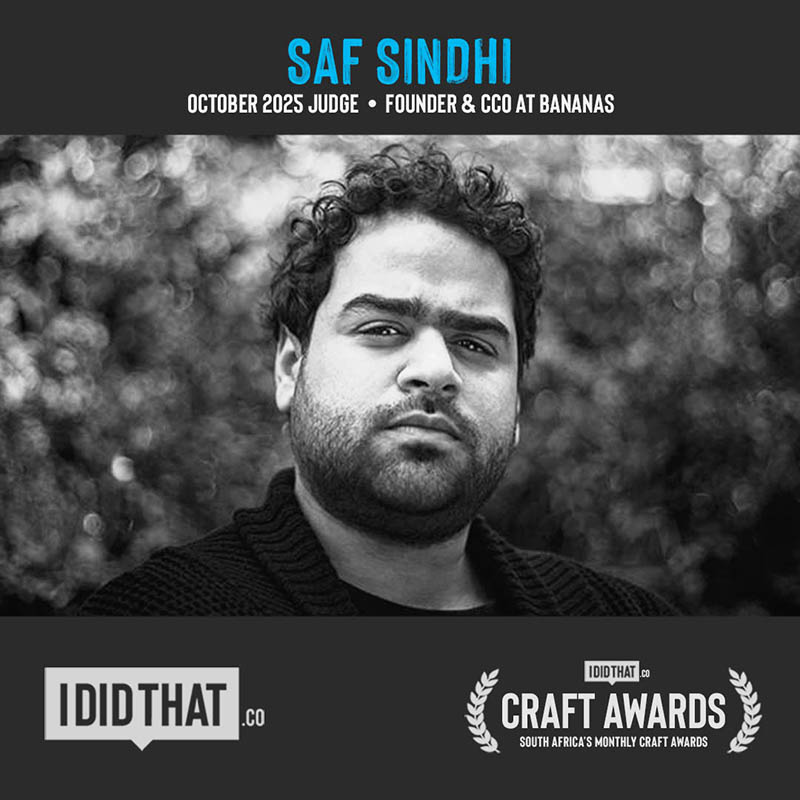
IDIDTHAT Judge’s comment: Saf Sindi, Founder & CCO at Bananas South Africa
”This piece of film translates the artist’s music visually and beautifully. It could easily have been just another doccie-style endorsement, but instead, every frame mirrors the syncopated rhythm and experimental pulse of 3 Step Afro House. The texture, color grading, and lensing choices build a world perfectly suited to Thakzin’s story.
Nothing feels manufactured. It’s not trying to prove it’s African, or cool, or cinematic, it just is. That kind of quiet confidence is rare, especially in branded work.”
Watch the Work
Nike x Spotify ‘The Alchemist’ was awarded an IDIDTHAT Craft Mention in May 2025 by Sbu Sitole, Chief Creative Officer at The Odd Number. The commercial was awarded in the category Direction to director Monde from SHIBOBO!.
What the judges had to say…

IDIDTHAT Judge’s comment: Sbu Sitole, Chief Creative Officer at The Odd Number
”This is fresh! It’s simple! It’s a treat in how it’s been put together. Enjoyed watching it.”