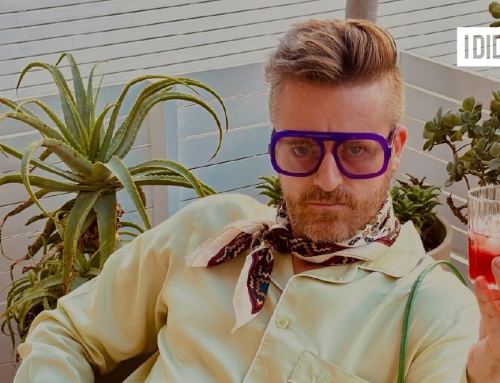

Marketer Spotlight: Vaughan Croeser, Vice President of Marketing at South African Breweries
There are some brands so deeply woven into our daily South African lives that they’ve become as familiar to us as rugby, boerewors, and arguing about both. When it’s your job to look after those brands, to keep them loved and relevant… well, no pressure, right? That’s exactly the world Vaughan Croeser, VP of Marketing at South African Breweries, operates in every day. In this Spotlight, we spoke to Vaughan about trusting directors, backing big ideas, judging at Cannes, and why long-term brand building still requires short-term courage.
Vaughan has developed a reputation for championing craft and investing in long-term creative partnerships. Under his leadership, SAB’s brands have built a reputation for creative collabs that show respect for the craft, the creative and production process. In close collaboration with agency partners Ogilvy, Boundless, Joe Public, Promise and Retroviral, Vaughan’s helped build and protect brands that have been running for decades without ever losing their edge.

Q: When you look back at your career so far, what moments have most shaped how you think about creativity and craft today?
Vaughan: Going back to the mid 2000’s when Castle Lite was still a relatively unknown brand, the brand team at the time, decided to do something quite out of the ordinary for a local beer brand. They used an international artist, Vanilla Ice, to land the proposition of extra cold refreshment. So finding a really a unique refreshment proposition in the beer category and a highly creative way to bring the idea to life. That was really a catalyst moment for the brand, you could see the power of creativity driving long-term business value. That moment showed me the power of well-crafted creativity. Castle Lite remains one of the most popular premium beer brands in South Africa. And it was all due to a very strong strategy of great positioning and some really breakthrough creativity. It taught me to think bigger, to raise my ambitions and seek for breakthrough innovative ideas.
One of the best recent examples is the Corona brand. The brand has a payoff line which says “This is Living” and it shows beautiful landscapes of people who are outside enjoying nature. It is such a simple idea. The idea of reconnecting with your true self by enjoying nature, which I believe in today’s world, today’s urbanised world, is such an aspirational idea. The beauty of the idea is captured in the simplicity of its visuals. You can look at one billboard or one poster and immediately know what that brand is about. To me this is a wonderful example of the power of creativity, visibly driving commercial results. That is the power of simplicity and a universal human insight.
The much-talked-about, award-winning Corona ‘Limetime Guarantee’ in collaboration with agency Boundless.
Q: You’ve said you’re more interested in mass relevance than mass appeal. How do you personally know when an idea is genuinely relevant, not just popular or loud?
Vaughan: Building brands for the long term is something that I’m extremely passionate about. I think as marketers, you always have that pressure of delivering short-term results. But I think that building brands consistently for the long term is where the real value lies. Resisting the urge to strip away what made that brand great in the first place. If I think of some of our most successful brands, like Carling Black Label, Castle Milk Stout, Castle Lager. These are brands that have consistently stood for the same thing. So yes, we do need to think about how we drive short term sales or how we capitalize on important cultural moments, but the real magic is applying creativity to these tested platforms that might be ten, twenty years old. A great example is Castle Lager’s decades long relationship with our national sporting teams. Although the platforms are well established, creativity allows us to connect with fans in new ways, bringing new experiences and authentic moments to fans that feel current and contemporary. It is bringing that new news to consistently developed platforms.
Q: A lot of marketers talk about long-term brand building, but the pressure is often very short-term. What helps you hold your nerve when the numbers haven’t moved yet, but you believe the idea is right?
Vaughan: I think when it comes to brand relevance over the long term, the first critical ingredient is having a very clear positioning. When you are clear about what your brand stands for, you can show up in a consistent way, but with a distinctive voice. I think the second important thing about long-term relevance and scale is you need to understand your consumer very well. You need to be very close to your consumer and understand who that target audience is and what are the things that you solve as a brand. What is the job that you do as a product in that consumer’s life? If your positioning and audience is well defined, and you are able to clearly identify the role your product plays, then it is up to you to deliver that message consistently over time.
Q: What kind of idea still gives you that gut-level excitement?
Vaughan: If I reflect back on an idea that gives me that gut level excitement, I’Il definitely say Castle Lager’s Bread of the Nation is up there. Taking the by-product of the brewing process, the spent grain and converting that into a flour to create bread was certainly a very exciting idea. What I really enjoyed about it is how it spanned across our value chain. Working with our nutritionists, working with the brewers, getting the whole supply chain involved to create a highly nutritious product from something that usually goes to waste. At the same time being able to tell the story of the quality home grown ingredients that go into Castle Lager was really a great privilege.
L: Check out the now famous campaign ‘Bread of the Nation’ done in collaboration with Ogilvy. R: SAB’s newer work celebrating their 130 year milestone that’s also worth a watch, ‘Forever Committed’ in collaboration with the agency Boundless.
Q: When a creative idea lands on your desk, what are the red flags that tell you it’s not there yet, even if it looks “good on paper”?
Vaughan: Any marketer’s greatest fear is killing a great idea. When it comes to new ideas, I like to use the “Green Housing” principle for which the acronym is S.U.N.
The first step is to SUSPEND judgement to really give the idea time to grow. A multitude of factors could be influencing your decision making in the moment you first hear and idea, so giving it space by suspending judgement is a great way to make yourself open to the possibility of a new, scary idea.
The second step is to deeply UNDERSTAND it, take the time to speak to the strategist, the chief creatives and get to a very deep level of understanding of what this idea is trying to do. You might accidentally dismiss a great idea, simply because your own biases or past experiences are clouding your understanding.
The third step is to NURTURE it, give it some water, see how it blossoms, how it could flourish. A lot of great ideas start out as small sparks, that literally need care and oxygen to grow. That’s the beauty of the SUN principle.
– Roanna Williams, Co-Founder & CCO at Boundless
Q: What’s your role as a marketing leader when it comes to creativity and craft? How involved are you in the process, from brief to shoot, and how do you create the kind of environment where great ideas can actually thrive?
Vaughan: I believe the role of the marketing leader is to create an environment in which creativity and craft can flourish. So it must start with a shared belief that creativity is of vital importance. The belief that we are not only capable of great work, but can consistently produce it. So set the ambition to create work that lives up to the highest standard. Fundamental to creating this environment is the brand leaders’ relationship with their creative partners. This takes immense trust, bravery and discipline. Great brand leaders understand how to create that environment. On a more practical note, the creative muscle improves with practice, so the more you immerse yourself in and expose yourself to the best work in the world, the more likely you are to demand it, and identify it. The other important lesson is to admit that you don’t know everything, to approach creativity with a sense of humility and curiosity. So seeking outside, professional council to help you shape the work is a great way to fast track your creative journey.


TOP: A proud team in Cannes holding their Gold Lions. From L to R: Adrienne Pace from Ogilvy; Pete Case, CEO & Creative Chairman of Ogilvy South Africa; Vaughan Croeser, Vice President; Thomas Lawrence, Marketing Manager at Castle Lager (AbInBev); and Roland Sweet, Founder of LittleBig.
BOTTOM: Vaughan on set for Castle Lager. Pete Case, Mariana O’Kelly (current EVP/Executive Creative Director at Leo Chicago, former ECD Ogilvy) and Vaughan.
The creative process is without a doubt my favourite part of my job. So, I really like to get involved in the briefing stage, understanding what the question is that we’re asking our agency to solve. Are we clear on the insight? Are we clear on the problem that we’re solving for consumers? I also like to see the big idea presented from the agency, looking for that magic, that energy from our partners. You can tell when they are really excited about an idea. Then finally, as a brand leader, there is a big responsibility to trust the creative experts in the actual production process. A mature brand leader can discern the difference between guiding the creative partners on maintaining the integrity of the brand, and letting the creative experts apply their craft to maintain the integrity of the idea. I have found this to be one of the greatest challenges of the marketer, understanding where your responsibility ends and where the creatives responsibility begins. This is what I mean by trust, bravery and discipline. I have personally ruined a few great ideas because I unwittingly played the part of the creative expert.
Q: What makes a director or production partner feel like the right collaborator for a piece of work?
Vaughan: The choice of the production partner is the responsibility of the agency. It is of course a great win when there is good chemistry between the brand leadership and the production partner. Sweating the detail in the pre-production phase and going through the process properly (reviewing the reels of shortlisted directors to identify specific creative capabilities that align with the vision of the idea, and ensuring a thorough understanding of the brand positioning is fundamental). Having the right chemistry with a production partner can really take the work from average to great.
Q: At what point in the process do you like to meet or engage with directors and what are you listening for in those early conversations?
Vaughan: The primary engagements should be in the treatment and pre-production phase. Directors bring their technical expertise and artistic vision and that’s really the moment for the marketer to be clear on their role as brand custodian, and having the maturity to trust the creative process. I really listen for how well the director understands the fundamentals or positioning of the brand. If that’s clear, you can let them get on with it.
In my previous life, I was a professional musician, so you must know that I will weigh in on the music conversation throughout the process 😊. I love how important music is in the creative process, so I always find myself pushing really hard for excellent music and sound design, as it’s one of the key emotional drivers in any piece of creative work.

Vaughan on stage at the IMC conference
Q: In a highly regulated category, you’ve spoken about seeing regulation as a creative challenge rather than a constraint. How does that mindset practically shape the work that gets made?
Vaughan: Thankfully our team doesn’t have to navigate this world alone. We have set up a highly capable council, made up of a diverse group of experts in various fields (from legal, corporate affairs to influencers and regulatory experts) who review the work twice in the creative process (at the idea stage and final creative output stage). Their sole responsibility is to protect our brands by pointing out where an idea or execution might be in contravention to our own social advocacy frameworks, as well as the self-regulatory mechanisms set out by the codes of the Drinks Federation and the Advertising Regulatory Board. So risks are identified early in the process and measures can be taken to mitigate. It enables a balanced perspective which respects the need for creativity that pushes the boundaries, while ensuring we act responsibly in all our communication.
Q: You’ve judged locally and internationally, including Cannes Lions and the Loeries. What does sitting in the jury room teach marketers that they can’t learn any other way? And how does that experience change the way you brief, evaluate, or back work?
Vaughan: I have been very fortunate to have had very enriching jury experiences both locally and internationally. You have the opportunity to meet incredibly talented marketers and creatives who have done amazing work, so to immerse yourself in their expertise is very enriching. I mentioned that creativity is like a muscle which you can train to make it stronger, and this is exactly what the jury experience gives the marketer. When you are spending hours immersed in work of the highest standard, it becomes very clear which work is strong, new and innovative and what is not. When I am fresh off the back of judging a show, I find my own evaluation of ideas becomes much sharper. I would encourage marketers to grab the opportunity to judge, be part of those conversations and train that creative muscle.

Vaughan judging in Cannes 2025. Vaughan judged in the category ‘Entertainment Lions for Sport’
Q: Finally, if you had to give one piece of advice to marketers who want to do better, more culturally meaningful work with creatives and production partners, what would it be?
Vaughan: There are several lessons that have helped me along my own creative journey. The first one is to have the ambition to want to do work that is at a world class standard. It simply starts with saying that we will not settle for ordinary, we will not do things that go unnoticed and that we want to push ourselves and our partners to do work that is great. So set the ambition to do great work.
The second learning in my journey has been seeking external guidance by creating creative processes. Making sure that you are building a very deep relationship with your agency partners, and creating the social systems and processes that aid us in the development of the work. We have two wonderful panels of local and global creative experts who help us review the work in the initial stages of development as well as after the work has been in market.

My third learning is about culture. Creating a culture of creativity where everyone is aligned on what good creative looks like, making sure that we have the right people on the team. People who want to create great work. People who understand that these brands are much bigger than us and that these brands will out live all of us. So we are merely there as custodians to leave them in better shape for the marketers that will come after us.
Lastly, love the brand you are working on. Understand it’s history, immerse yourself in that brand’s greatest work. Pinpoint the moments when that brand was at its absolute best and healthiest and learn from those moments, learn from the creative body of work. I often see brands bring back famous taglines or famous pieces of communication because they build on memory structures that were built over decades. If you love the brand you are more likely to convince others to love it too!
Ogilvy South Africa Creative Chairman & CEO, Pete Case on working with Vaughan…
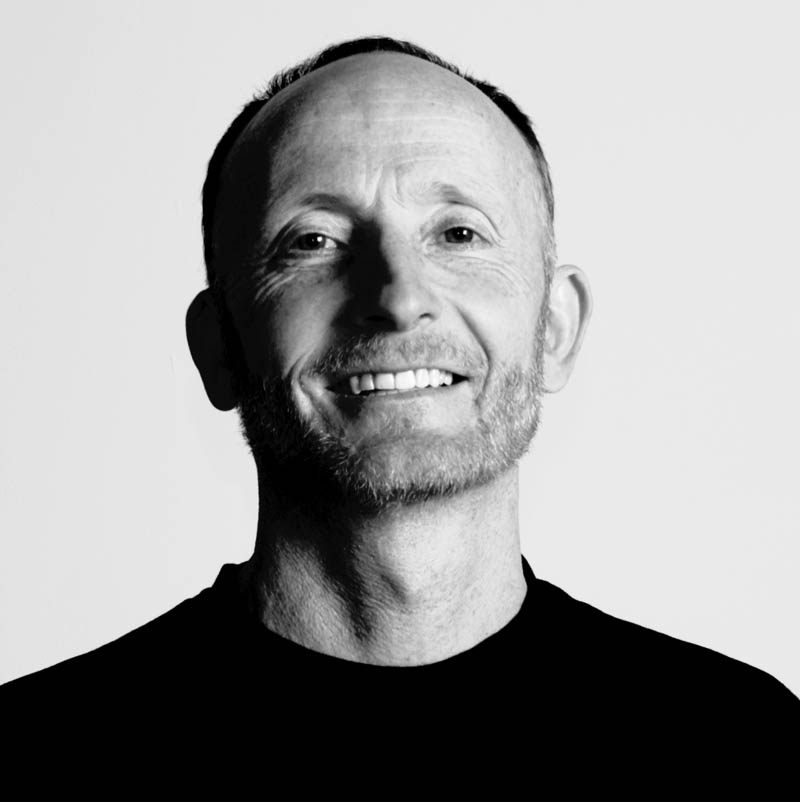
Pete Case is a passionate advocate for the power of creativity to drive business growth. With more than 30 years of experience, he has helped build and lead companies that thrive at the intersection of creativity, culture, innovation and commercial impact – operating at both team and board level.
Over the course of his career, Pete has been recognised with more than 1,000 global and local industry awards, including two Emmy Awards, three Cannes Lions Grand Prix and The One Show’s prestigious Green Pencil for environmentally conscious creativity.
A serial entrepreneur at heart, Pete is driven by building businesses that create meaningful value while contributing positively to society. He is the Founder of Gloo, one of South Africa’s most celebrated digital marketing agencies, and has been ranked the No. 9 Chief Creative Officer globally by WARC, as well as the No. 1 CCO in South Africa.
Pete says, “Having worked closely with Vaughan for many years on some amazing brands, I’ve always appreciated his collaborative leadership style. He continually searches for the best intersections of thinking, process and talent, in order to create the strongest possible outcome for the brands we work on together. We both share a ‘divinely discontent’ mindset (which is never easy to live with !!), always pushing and curious to see how and where we can improve the impact of our team’s work. You can tell the true quality of a leader not just when times are good, but also when times are tough – and he’s been the consistent central stakeholder of honesty, through the inevitable emotional peaks and dips of any long-term relationship. I’ve been fortunate to represent our team’s work with him on stage, a few times over the years – a highlight was co-presenting one of South Africa’s only Cannes Titanium finalists a few years ago. It’s a more intense process than it appears from the outside! and it reinforced my understanding of how much he respects the effort and outcome of true teamwork. To me, that’s a key success factor in his leadership style and to hopefully enjoying the journey along the way.”
Co-Founder & CCO at Boundless, Roanna Williams on working with Vaughan…

Roanna Williams is Chief Creative Officer and Co-Founder of Boundless, a new independent creative agency with a bold ambition to make the world’s most loved ideas TM. She describes herself as a creative activist, a visual storyteller and boundary-pusher, titles earned over 25 years of shaking up the advertising world. As the first female Chairperson of South Africa’s Creative Circle, she’s championed diversity, mentorship and braver voices in an industry that sometimes takes itself a little too seriously.
Her career is decorated with award-winning work across FMCG, finance, travel and beyond but Roanna’s proudest moments are less about trophies and more about impact. She’s the kind of creative who melts down decades of awards to honour an entire team, or hijacks the Durban July to stop animal cruelty. Equal parts grit and generosity, she’s known for her humour, heart and fearless drive to make work that matters, and to make the industry a better place while doing it.
Roanna says, “Vaughan has a deep respect for creativity and the role it plays in driving real business results. He empowers his marketing teams to lead with confidence, while actively valuing and protecting the expertise agencies bring to the table. Rather than shutting ideas down too early, he understands that breakthrough thinking takes time, exploration and trust – and that patience is often what turns a good idea into a great one.
He champions innovative work that solves tangible business problems and isn’t afraid to back bold thinking. Vaughan is drawn to exciting, breakthrough ideas that push beyond the brief and challenge conventional approaches – including his own. He is one of the rare CMOs who truly believes creativity isn’t a “nice to have,” but a core ingredient of brand growth and long-term success.”
Watch the Work
Flying Fish ‘Surprisingly Good’ was awarded an IDIDTHAT Craft Mention in May 2025 by Zwelethu Radebe, Director at Egg Films. The commercial was awarded in the category Direction to director Jono Hall from Gentlemen Films.
What the judges had to say…

IDIDTHAT Judge’s comment: Zwelethu Radebe, Director at Gentlemen Films
”A nod to the comedic performance direction of the ensemble cast, blended with the right balance of hitting the story beats and world-building.”
Produced by the IDIDTHAT Content Studio
Credits: Anne Hirsch / Julie Maunder
This content is the property of IDIDTHAT.co and may not be reproduced in any form without prior written consent. All reprints must credit IDIDTHAT.co as the original publisher and include a direct link to this site.
If you’d like us to create editorial content, help you strategise your publicity, or put your work in the spotlight, get in touch. Explore our editorial packages or contact julie@ididthat.co Let’s get your work seen. #Boom