
Two Tshepos on creative chemistry, good directors and protecting the idea
IDIDTHAT and Heineken Beverages presents I SAID THAT, the Q&A series featuring South Africa’s top creative talent.
Meet Tshepo²: same first name, different disciplines, plenty of creative tension and a shared love of making work that feels really South African. Tshepo Tumahole and Tshepo Mogorosi have been making award-winning work together at Joe Public for almost a decade, first as Copywriter and Art Director, now as Creative Directors. Clearly, pairing two Tshepos was a very good idea.
We caught up with them about the partnership, the work, the directors who push it further and the ideas worth fighting for.
Q: You’ve both been at Joe Public for a huge part of your careers, growing from art director and copywriter into Creative Directors together. How has that journey been for the both of you?
Tumahole: I’ve worked with Tshepo for almost 10 years now, and I think the one thing that has kept our partnership going is trust and open-mindedness. I trust him with my ideas and he trusts me with his. Tshepo and I are quite curious and inquisitive by nature and working together at an agency like Joe Public, which allowed us to experiment quite a lot in our junior years, helped to develop and refine our growth and creative approach to the work. It also taught us quite early that good creative work comes from challenging the obvious and being open to where an idea can take you.
Mogorosi: The journey has been wonderful. Roanna Williams was the one who suggested pairing us together. We had already built a friendship before we started working together, which was a great foundation. Tshepo’s name was also a bonus. We learn from each other on and off the job and realised quite early that competing would never benefit the work or our career goals. We respect each other’s crafts and want to be the best at our respective fields, art direction and copywriting.
Q: At what point did you realise you actually had a creative partnership worth holding onto?
Tumahole: When I found out his name was Tshepo, kidding. Respect goes a long way in creative partnerships. Ideas matter too, but respect is important. We have similar backgrounds but different life experiences that actually make our work better and always make us look at what we do from different perspectives, so that’s really a plus for me. I think that creative tension is important because it means you’re constantly pressure-testing the idea rather than just trying to get your own thinking through.
Mogorosi: We have the same vision and both want to be the best. We’re learning daily and put in the work. A good partnership requires constant communication. Consistency is key, and when we’re not consistent, we push ourselves harder to inspire and create work we’re proud of.
Q: How do you come up with your ideas, any pointers for emerging creatives?
Mogorosi: Ideas should be funny to come up with. I remember the first job Tshepo and I worked on. We still used job bags back then, and the project was labelled ‘TAVS’. It was a Brothers for Life campaign for HIV and AIDS testing. Out of nowhere, Tshepo looked at the name ‘TAVS’ and said, “Imagine we started a rap group called Tshevs.” For a slight moment, we forgot about the brief and started writing funny lyrics. During that moment of forgetting about the brief, ideas came and the client loved what we ended up presenting. It was the best way I’ve ever worked. We grow and change, but the energy and stupidity that drives us is still there. So, I would advise them to have fun. No brief is ever too serious, and some of the best ideas start with, “What if we…?”
Tumahole: Be curious and study your idols. You can’t be in the industry and not study work from 5, 10, 15 years ago. That’s 10% of your job done. Most industries haven’t changed much, and most products are still similar, so look at how those award-winning creatives tackled those problems and then find your own solutions. Don’t recreate their work or ideas but recreate their approach to solving problems and come up with new, fresh thinking. Understand the strategy behind the work, understand the insight that unlocked the idea and most importantly, understand why the creative solution worked.
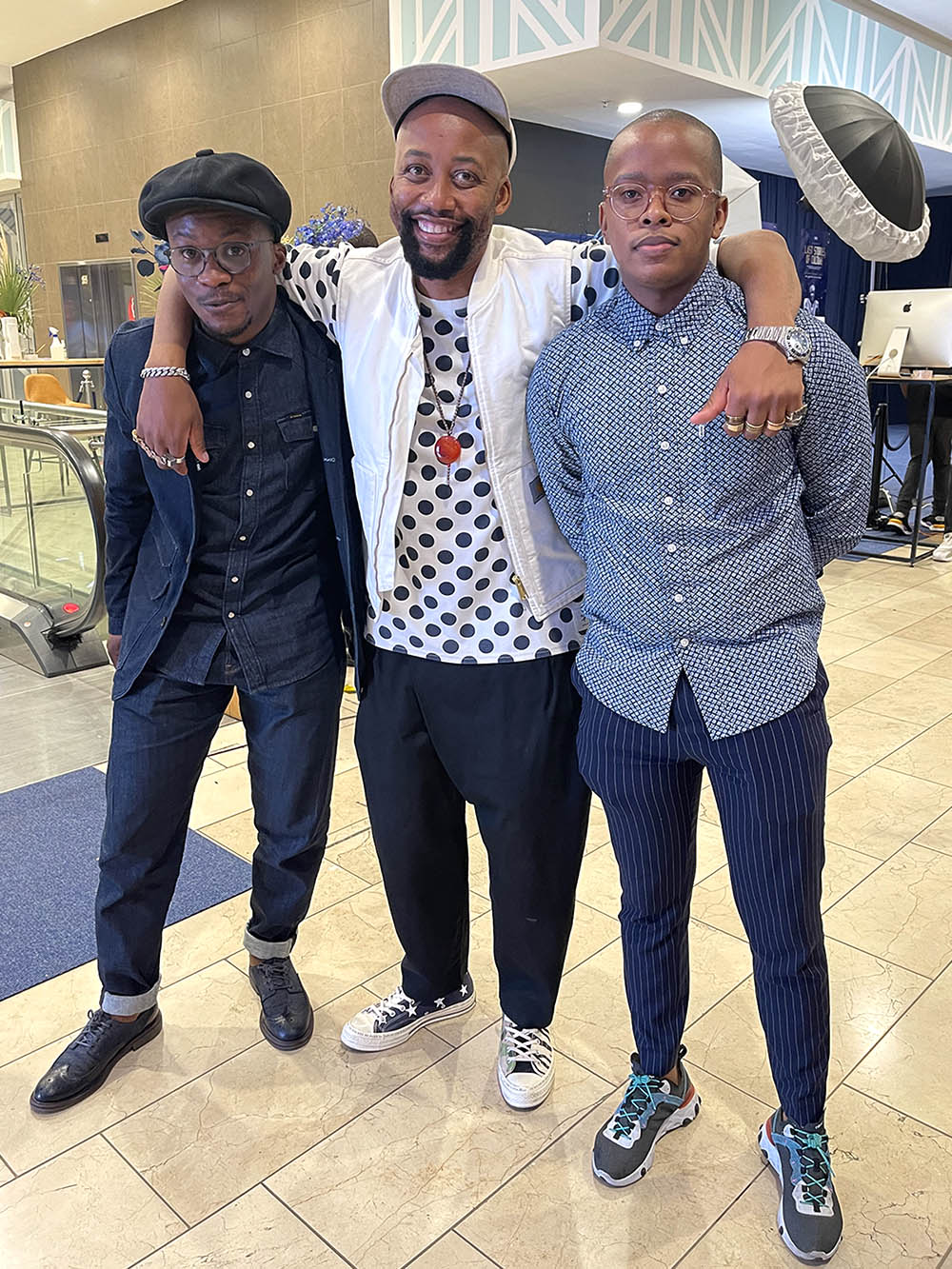
Tshepo Mogorosi, Egg Films director Lebogang Rasethaba and Tshepo Tumahole at the premiere of the ‘Last Stories of Culture’ documentary they shot together for Castle Milk Stout
Q: You came into advertising through very different doors. Tshepo Mogorosi, you’ve spoken about arriving without the traditional advertising-school background and basically teaching yourself the craft. Tshepo Tumahole, you’ve said you didn’t even really know what copywriting was when you started. Do you think coming in slightly sideways shaped the kind of creatives you’ve become?
Mogorosi: It definitely shaped the creative I am. I had to work really hard to learn what I have learnt, and I have had a thousand mentors to get me here but the best trait was always having the will to ask when I didn’t know and applying myself to getting to the level of those who studied art direction the traditional way.
Tumahole: To a degree (see what I did there?). But in all honesty, it’s what you do when you’re in the industry that really shapes the creative you become. The hours you put in and how badly you want it are essentially what gets you to achieve it. Advertising is a craft and you only really get better by doing the work, getting feedback, understanding what works and what doesn’t and constantly sharpening your creative judgement.
Q: What does the division between writer and art director actually look like between you two?
Tumahole & Mogorosi: We’ve been working together for so long that we have come to trust each other even on things we don’t specialise in. There’s no reason an art director shouldn’t have copy input, and there’s no reason a copywriter shouldn’t have art direction input, respectfully, of course. At the end of the day, we’re both there to solve the same communication problem. The disciplines are different but the objective is the same and it’s to make the idea as strong as it can possibly be.
Q: You’ve made some very South African work together. What’s the key to finding that uniquely SA voice?
Tumahole: It’s simple. Don’t try to be something you’re not, don’t try to say something you don’t understand, and don’t try to sell to people who don’t live here. We are all South African, and our different races and experiences are what make us who we are. Probably our key to unlocking Cannes as a country too. I believe the day we can start hearing words like, “That work can only be from South Africa,” at international award shows, then we will really get the world to stand up and realise what this country is made of. Let’s turn our cultural specificity into a creative advantage.
Mogorosi: For me, the key to finding that uniquely South African voice lies in conceptualising the things we know. We all hail from here, but we have all experienced South Africa in vastly different ways. However, the one thing that sets us apart and gives us a voice is the insights we grew up with, the ones we hope will resonate with others in the same way they do with us.
Q: What’s your favourite piece of work you’ve made together, and why?
Mogorosi: Chicken Licken’s ‘Undefeated Since Forever’. It will always be something close to my heart, something that went from football banter and became something that football fans here in South Africa talk about and reference. Tshepo and I support opposing soccer teams. He supports Orlando Pirates and I support Kaizer Chiefs, so while working on this, I couldn’t help but think that Jose was the saviour Kaizer Chiefs needs. Going on TikTok and seeing coaches try the formations and just the overall reception, was truly elite for me.
Tumahole: It has to be the Chicken Licken ‘Undefeated Since Forever‘ film. Everything just came together on that piece of work. We also have Greg Gray, Helena and the entire Romance team to thank for taking it to the next level. What makes it special for me is how it just took on a life of its own. Soccer fans would reference Jose Mazibuko at any given moment. People don’t know this, but even a coach in the PSL once quoted Jose Mazibuko’s formations during a real pre-match interview. A close second is the Chicken Licken ‘Nyathi Rider’ film.
Chicken Licken – Undefeated Since Forever
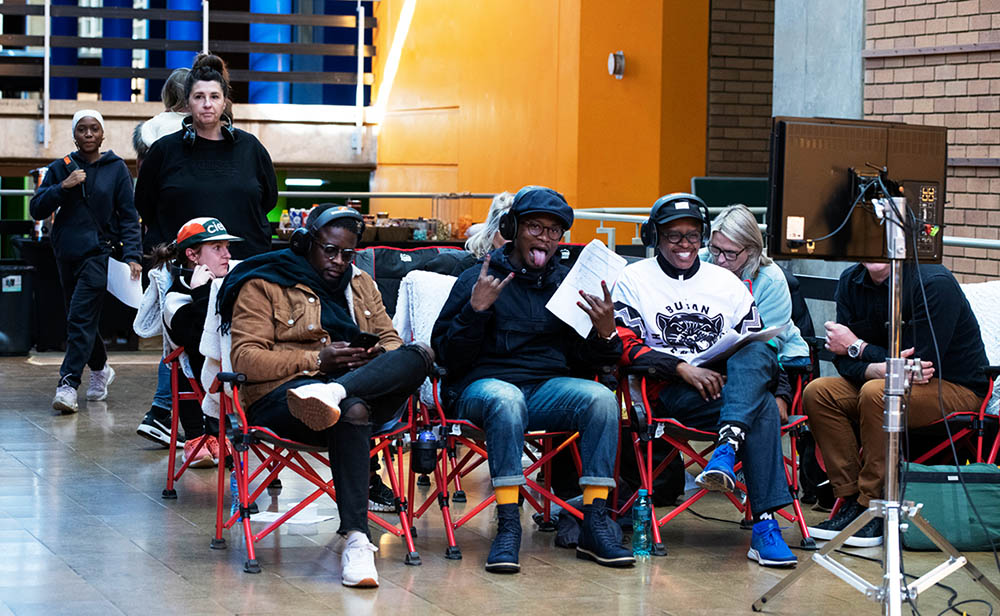
On set with Romance shooting ‘Undefeated Since Forever’
Q: Once an idea leaves the two of you and starts moving through client, production, directors, and post, what are you most protective of?
Tumahole: The idea. We can always add to the script and say more about the product or even look at the visuals and make them more of a treat but never allow the idea to get lost in all of that. The execution can evolve, but the central creative idea has to remain intact.
Mogorosi: There’s nothing that can’t be changed by the client but we are precious mostly about the script or the story because that’s the skeleton and everything else is the regalia. We are very collaborative, though, and we believe that if we are all passionate about the piece, and anything that needs to be changed is to better the piece, then we are not too precious.
Q: When you’re choosing directors, what are you actually looking for? And are there times when the two of you completely disagree about who should get the job?
Mogorosi: When choosing directors, we look for the right people for the job based on what they have done that is closest to what we are trying to achieve, and then we make our selections. We always focus or lead with the story and secondly, look at how the director can uplift this piece aesthetically. We try not to compromise on what we are trying to achieve when we select and brief them. The only times we disagree is when we have to choose between beauty and story.
Tumahole: The job usually dictates, but I think what makes most of the directors we have ended up working with get the job is that they understand how to change something without changing everything. They fully comprehend that sometimes an agency script has existed for six months and gone through 1001 reverts before it got briefed out. For me, a great director understands the intention behind the idea, not just the words on the page. They should be able to elevate the execution without losing the strategic or creative proposition. We hardly ever disagree on directors, and I must add that we have a lot of talented directors in South Africa, many of whom I still wish I could work with.
Q: What’s the best thing a director has ever added to one of your ideas that neither of you saw coming?
Tumahole: There’s plenty. Our directors here in South Ahh… are one of a kind. Zee Ntuli (Darling Films director) once made us change the song ‘If You’re Happy and You Know It, Clap Your Hands’ and make it ominous with slightly dark suspense. How do you even think of making such a happy song ominous? Only Zee knows, and it worked so well. Pete Porhosky (Plank Films director) once looked at a script and said, “We are not going to use a drone on this one; we are going to use an actual helicopter.” My first reaction was, “Does this man know we are in 2025?” But we went with his call, and it turned out to be the best decision ever. There has been plenty more, and they all just work, like how we recently flipped a car in Joburg CBD with Greg Gray (Romance Films director). That’s the beauty of collaboration. You can start with a very defined creative idea but when you bring the right director and production team into the process, they can find another layer of magic in it.
Mogorosi: To be honest, it was Greg Gray on ‘Undefeated Since Forever’. He added everything. Sometimes you have a script and it’s a complete script and it doesn’t need too much and then you find a director that understands that this doesn’t need too much but continues to push this thing to its absolute best. The cast, no compromise. If you can’t find what you want locally, then get it, even from Europe. The rehearsals, pushing and making sure those formations were so believable but also bizarre. Choreographing every single one of them. Every little detail matters.
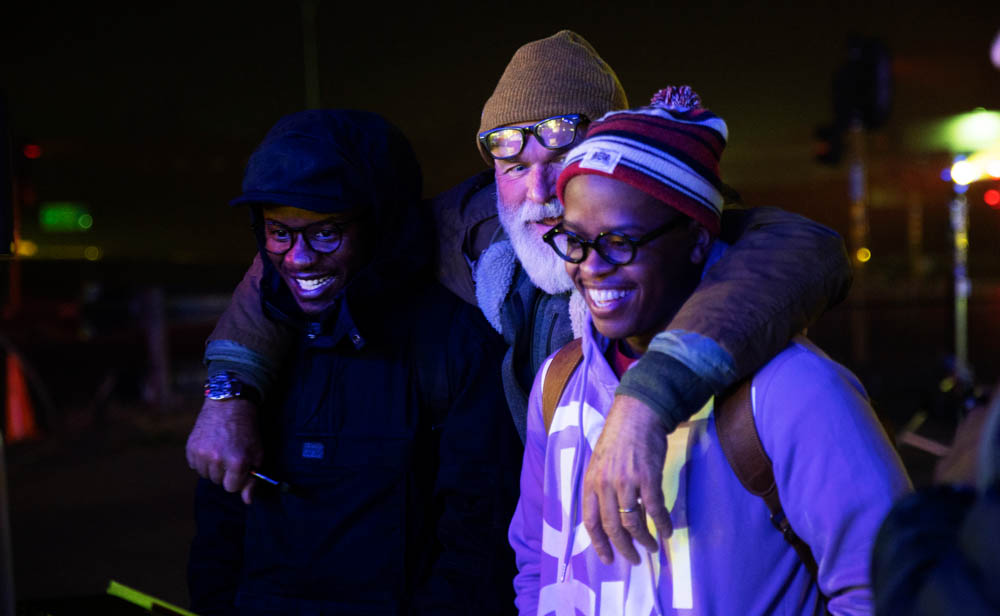
Tshepo Mogorosi, Tshepo Tumahole and Greg Gray (Romance Director)
Q: You’ve both had a lot of award recognition relatively early in your careers. Does winning make you more confident in your taste, or can it start messing with your instincts?
Mogorosi: Winning my first award made me confident in my taste because I finally said that there’s something that I am doing that is dope, and my hard work is finally being recognised. I felt really happy and more confident. But after that first one, the other ones that come are a stamp that says you can really do this, and they make you want to try to compete at the highest, highest level internationally.
Tumahole: It makes you more confident in your taste but it also shows you how much more you can still achieve. Winning is great but watching people do work that wins more than yours is what every creative needs. You need to realise that there’s so much to be achieved out there. It needs to drive you, to inspire you and give you confidence that if so-and-so could do it, then what’s stopping you? But it’s always important to remember that awards are validation but they can’t become the validation you create for.
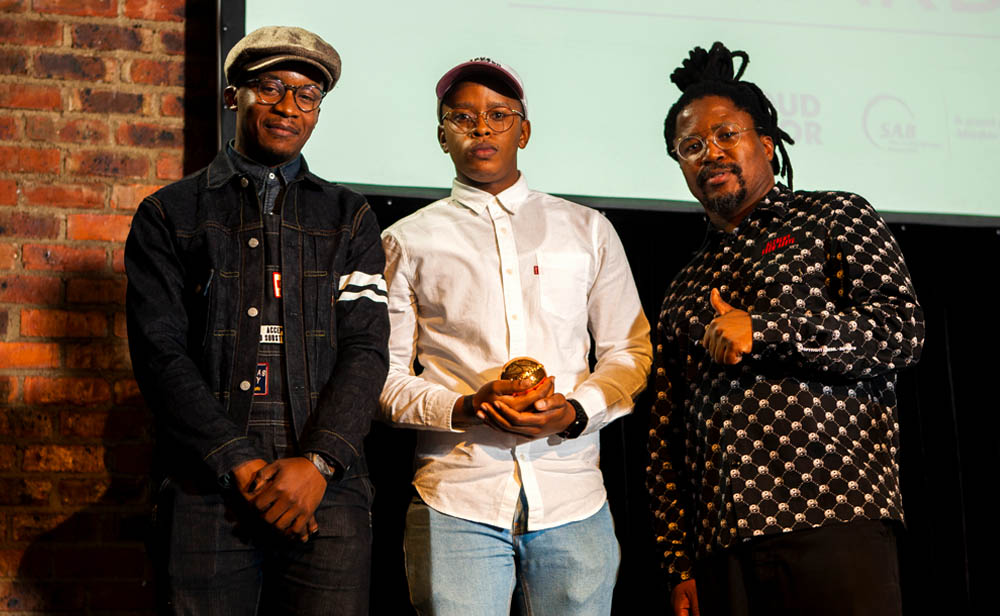
Tshepo Mogorosi, Tshepo Tumahole & Neo Mashigo (Group CCO of The Up&Up Group) at Creative Circle ‘Ad of the Year’
Q: You’ve worked together for years. What is the other Tshepo brilliant at?
Tumahole: A lot of things, but what I have always admired about him is his ability to craft. He has an incredible conceptual ability and can take a strong idea and keep pushing it until every detail is doing its job. I also admire his willingness to learn. He’s always curious, open to new ideas and looking for ways to get better. He has a genuine passion for what he does and you can see it in the way he approaches the work and fights for ideas he believes in. But beyond the creative, I really admire his people skills, he does that so much better than me. He knows how to connect with people, bring out the best in them and build genuine relationships. After working together for so many years, I think it’s that combination of talent, curiosity, passion and character that I respect most about him. He’s such a brilliant work partner.
Mogorosi: What makes my writer brilliant is, firstly, that he is incredibly smart. He’s one of the most focused individuals I know, with an almost relentless desire to become the greatest writer he can be. But beyond the writing, it’s the moments he creates through his thinking that make him special. He’s a brilliant critical thinker. He can solve problems on the spot, see things from angles I hadn’t considered, and sometimes leave me genuinely inspired by the way his mind works. Tshepo pushes me to uplift my game in the parts of advertising that don’t always come naturally to me. He challenges me, questions me and makes me think beyond the first idea. He always protects the idea, but more importantly, he protects the potential of the idea. He constantly makes me ask, what’s next? There’s no time to play around when you’re partnered with someone this focused. He competes with himself every single day and that energy is contagious.
Q: If you could steal one piece of South African advertising and put both your names on it, what would it be?
Tumahole & Mogorosi: PPS ‘Finding The Forgotten Graduate’ is still one of the most perfect pieces we’ve seen come out of this country. Then there’s the Lucozade ‘Teleconference’ radio. Every time we need to laugh, we listen to that.
PPS ‘Finding the Forgotten Graduate’
Q: Name and fame them. Who do you want to shout out in the industry right now for doing great work?
Tumahole: There are so many people, but Sanaa from Sanaa Films is my favourite industry person right now.
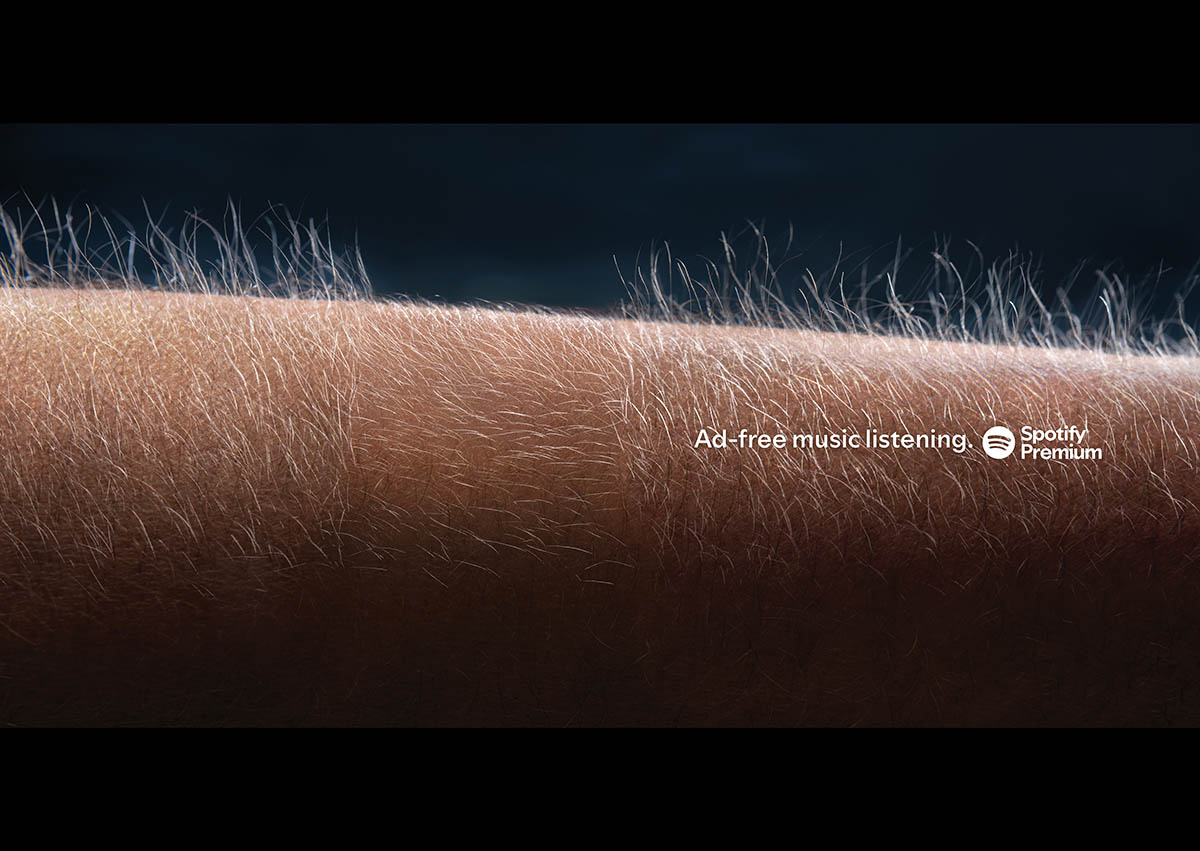
Mogorosi: I want to give a shout-out to the guys at LePub. Whenever I see their work on the green bottle beer brand, Tshepo and I look at it as motivation. They are really doing great work, from when they did the Social Screens, the F1 piece and the Spotify Print.
Heineken SA ‘Social Screen’

Heineken ‘Max Speed’
Q: Last one: What are you each obsessed with outside advertising right now? Music, films, creators, hobbies, internet rabbit holes – give us something good.
Mogorosi: I’ve always been fascinated by denim, but I’m currently obsessed with aged garments. There’s this new trend called fade farms, where people farm clothes and expose them to the sun and water to achieve that aged look. It’s similar to the way denim jeans fade over time when worn for extended periods. I find the beauty of faded clothing and jeans incredibly captivating. I secretly enjoy letting mine fade and age on my body.
Tumahole: I’m learning and creating so much with AI music right now. I’m not switching careers, but if Sony calls, I might just…kidding. I think what excites me about AI is the creative exploration. It’s another tool for experimenting with sound and visuals and taking something from an idea in your head to something you can actually experience. I’m still figuring out where it all goes but that’s probably the most exciting part of it.

Produced by the IDIDTHAT Content Studio
Credits: Anne Hirsch / Julie Maunder
This content is the property of IDIDTHAT.co and may not be reproduced in any form without prior written consent. All reprints must credit IDIDTHAT.co as the original publisher and include a direct link to this site.
If you’d like us to create editorial content, help you strategise your publicity, or put your work in the spotlight, get in touch. Explore our editorial packages or contact julie@ididthat.co Let’s get your work seen. #Boom