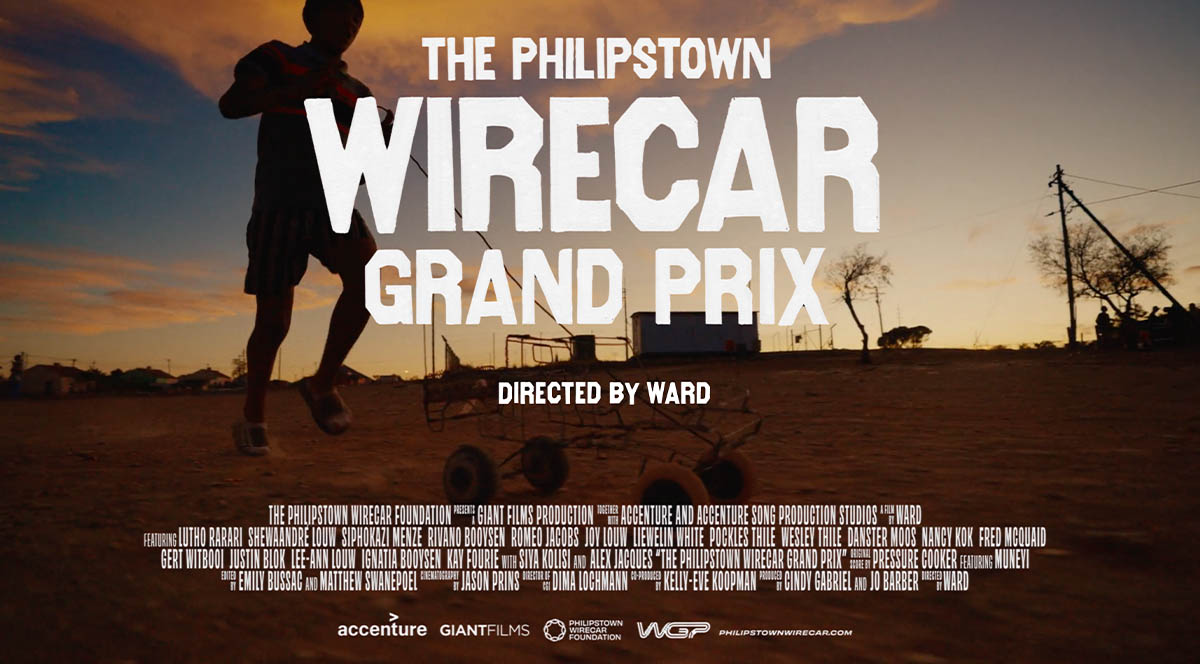
Q&A with Giant Films director Paul Ward on process, story and creative restraint in branded storytelling
In this Q&A, Giant Films’ director Paul Ward unpacks his process, his approach to storytelling, and how to navigate brand involvement without letting it overpower the human story. In a one-on-one conversation, we dig into the making of ‘The Philipstown WireCar Grand Prix’, a deeply moving, beautifully considered film that stays grounded while still feeling ambitious in scale and imagination.
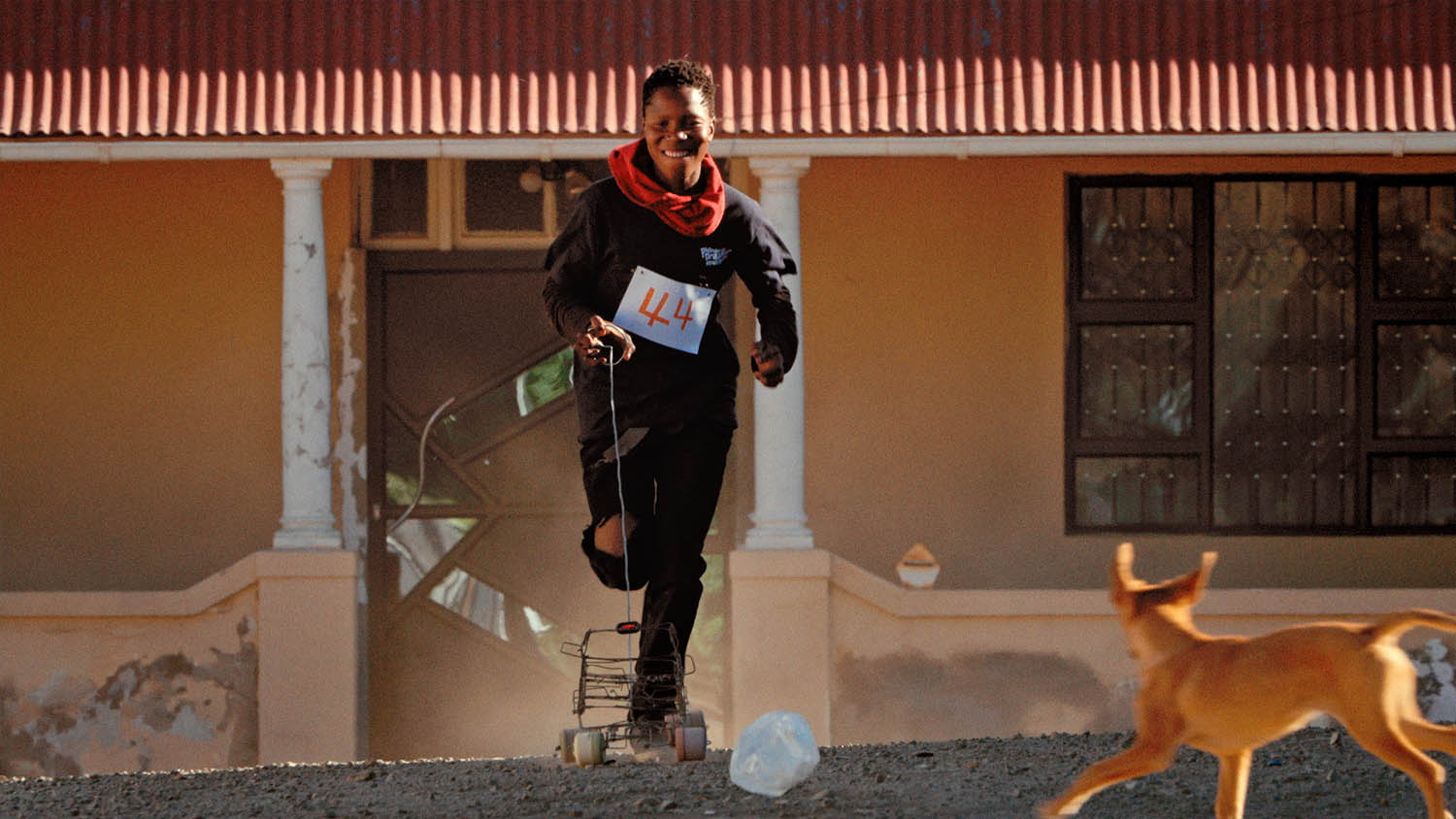
The film, now streaming on Prime Video, follows the youth of Philipstown as they build and race wire cars made from metal wires, before watching themselves reimagined as heroes in a CGI version of their own Grand Prix. At its core, it’s a story about imagination and pride, about a community seeing its creativity reflected back with care and respect.
For Ward, craft is often about knowing when to step back, when not to add more, and trusting the story to carry itself. That philosophy runs through the film, directed by Ward and produced by Giant Films in collaboration with Accenture Song for the Philipstown WireCar Foundation.
“I’m also obsessed with craft, but it has to be motivated or inspired from story, and sometimes the craft isn’t what you did or what tools you used, but what you didn’t use.” – Paul Ward, Giant Films

Q: When did Philipstown reveal itself to you during this project and what shifted for you once you met the kids and saw the wirecars in motion?
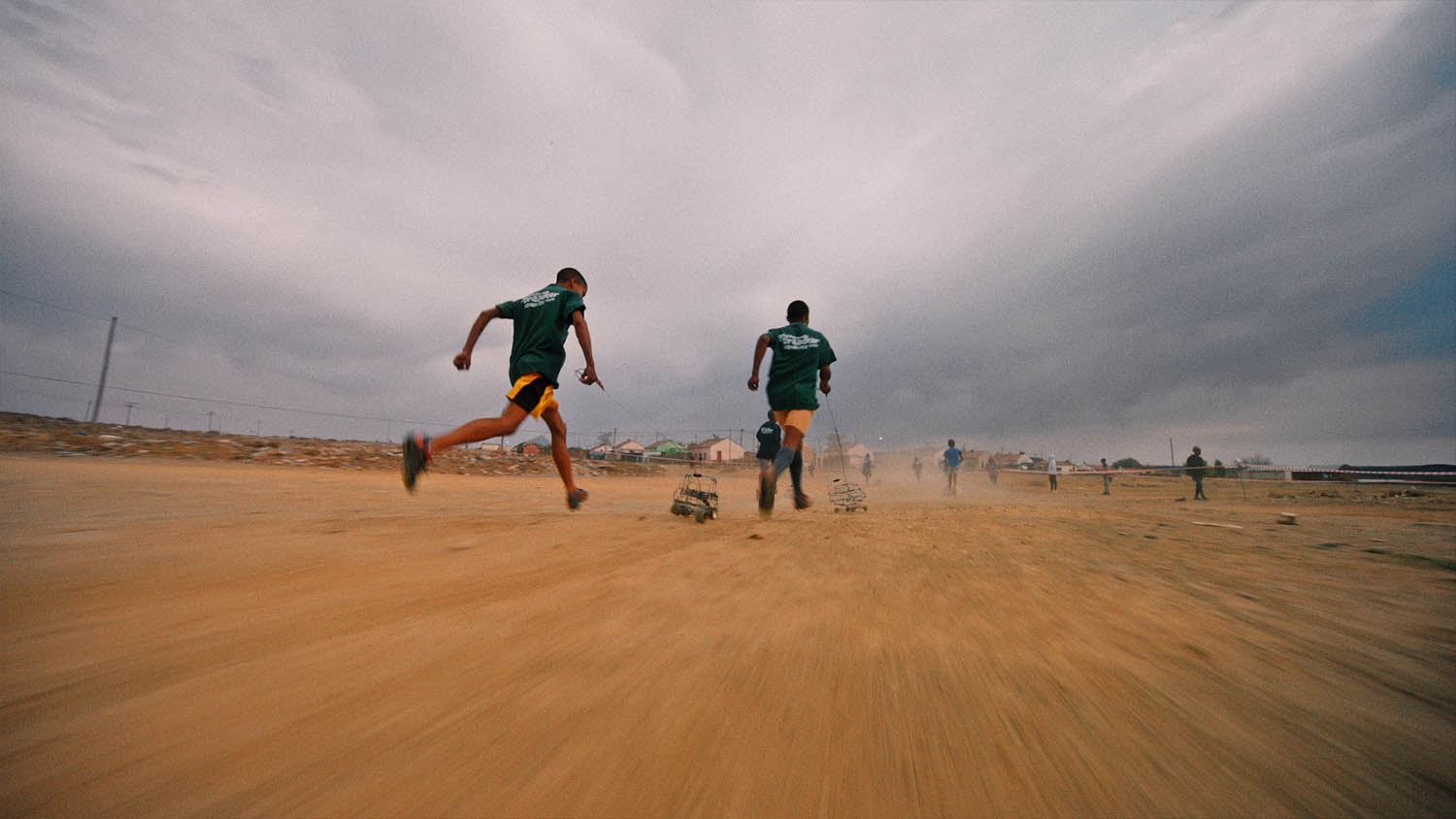
Paul: On the surface, Philipstown doesn’t feel very unique, especially when just driving down the main road, it feels almost cliché, a forgotten rural town, but the shift was instant, once we started to spend time in the town, especially with the children. When you see the joy of the children playing with their cars, you get a sense for the passion, but when you speak with the children, you realise it’s much deeper; there are imaginary worlds they have created, where rusted tins become farm animals, and dirt becomes a racetrack. Through the draadkar (Afrikaans for wire car) they have created a special world for themselves, and once we understood this the project really shifted.
Q: This film is arriving in the world not just as the film but also a foundation, a game, a culture. In your own words, what does this project mean to you?
Paul: At first, it was very motivating to be able to try and use my creativity for good, to create something that would ultimately benefit from the project if it’s a success. This also added a layer of self-inflicted pressure, to not only create something we are proud of, but really to make something that does justice to the incredible children of Philipstown. It was a very rare privilege to work on this project with a deeply passionate crew who all felt its significance and gave all of themselves to the project. It might have been briefed as a job but it became much more than that.

Q: The film holds so much dignity and joy without ignoring the reality of the town. How did you navigate telling a story rooted in hardship without making hardship the headline?
Paul: This was very intentional from the outset. I think the hardship is clear in every frame; it’s impossible to hide, and a story we all know too well, but the focus was to tell the story through the children’s lens. To hero them, their imagination, their resilience, their excitement, their joy, and to capture their spirit and create a film that honours that spirit. As the film process unfolded, we had versions of the film that were far more adult-heavy, focussing more on unpacking and contextualising the situation, but when those scenes were removed to allow space for the children to shine, the film found it’s voice.
Q: Wirecar-making is a generational craft, tied to resourcefulness, play, and Indigenous ways of creating. How did you approach documenting an artform that’s both every day and deeply ancestral?
Paul: At the start of the project, before we had a clear story direction, we delved deep into the wirecar-making process, interviewing far more makers than made the edit, and we could have made a film that unpacked that history. However, when we started to really refine our narrative, we honed in on the kids. For me, the inclusion of Daanstar (the OG) and The Witboois (the cool car makers) touch on the deep history and the modernisation of the art form enough, without taking away from the children and their stories.

Q: There’s a striking contrast between the dusty realism of the Karoo and the kids’ vividly imagined CGI racing world. How did those two worlds speak to each other in your creative process?
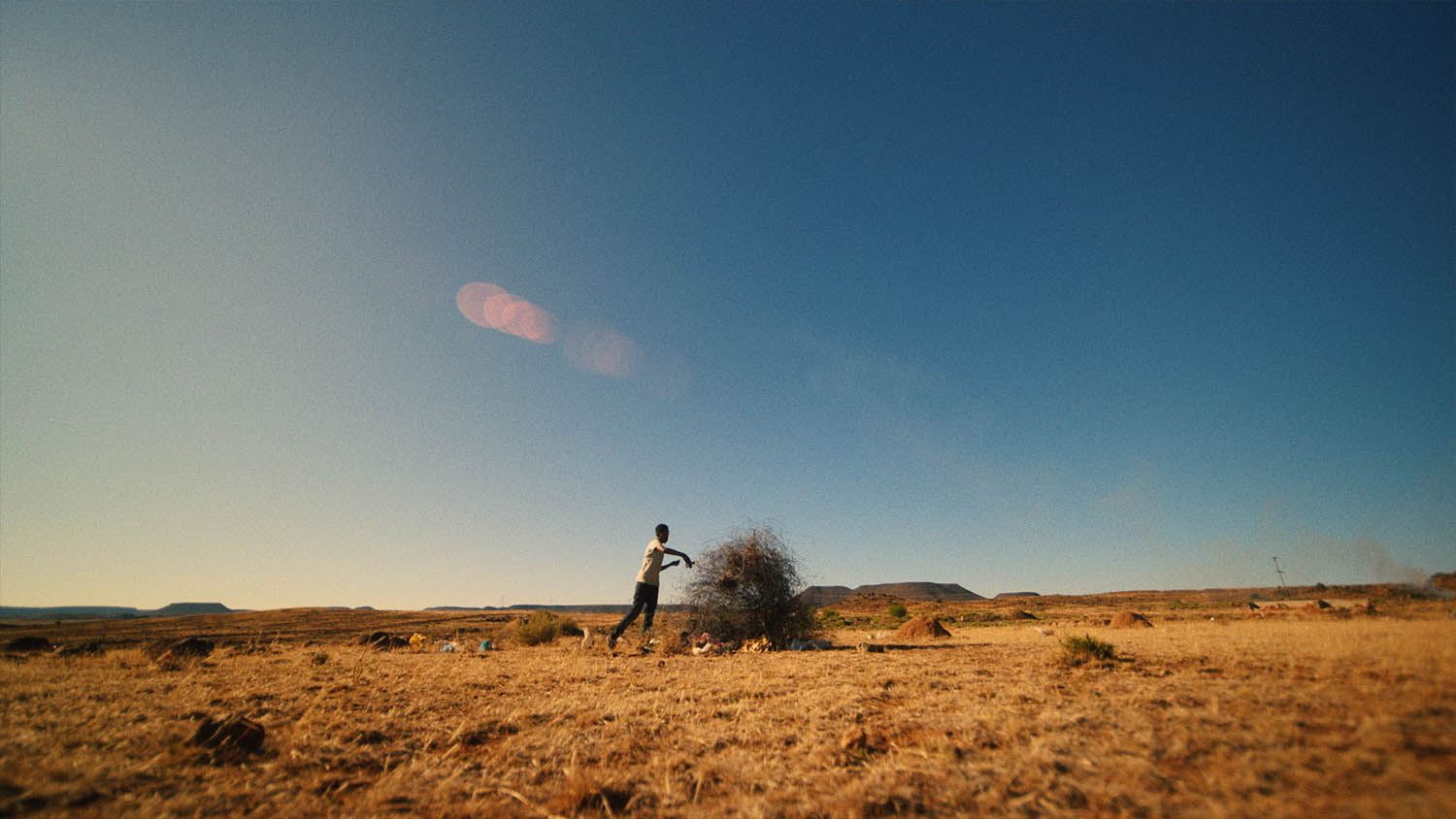
Paul: This contrast is very intentional and thematic, motivated and informed by story. The Karoo’s harsh realism grounds the film, while the CGI racing world visualises what’s happening inside the kids’ minds. Creatively, the CGI isn’t fantasy for spectacle’s sake, it’s a translation of their imagination, creativity, ambition and competition.
Through every step of the creative process, we aimed to really keep these two worlds in a constant dialogue: the rough, handmade wire cars shape the digital designs, and the grounded Karoo imagery keeps the vivid imagination honest.
The CGI world emerges not as an escape from that reality, but as an extension of it. When the kids talk about their powerful cars, and their passion for victory, and ultimately glory, they’re not pretending; this is how they’re experiencing it. So the CGI world becomes a translation of that internal reality, elevating their handmade wire cars into something mythic without betraying their origins.
Ultimately, the contrast speaks to the film’s core theme: imagination as a form of agency. In a place that offers very little in terms of infrastructure or opportunity, the kids build an entire Grand Prix out of scrap and belief. The CGI doesn’t overwrite the reality, rather, it reveals what’s already there.
Q: IDIDTHAT’s audience is craft-obsessed. Can you talk about the craft decisions that mattered most in making sure the humanity came first?
Paul: I’m also obsessed with craft, but it has to be motivated or inspired from story, and sometimes the craft isn’t what you did or what tools you used, but what you didn’t use. We wanted to keep the process intimate and not overwhelm the children, so we shot this with a small team, using small cameras, often operated by one person, to not intimidate or overwhelm the children, allow them to tell their story from a position of power. Of course there is deep craft in every area, from the soundscape to the music to the CGI, all with the goal of elevating the human story, but I think the craft involved in creating the space for the children is most significant.

Q: The sonic world of the film is so textured: metal scraping, wire rattling, footsteps, breath. How did sound design help you avoid sentimentality and lean into something more grounded?
Paul: The sound and music approach was quite clear from the start – be uniquely inspired from the town and the cars, we had no idea where this would lead, but I think we knew it would be interesting. I think what was achieved was pretty special, with an abstract pallet of sounds, and music, that was not only tactile but visceral and deeply emotional.

Q: One of the most powerful moments is when the kids and the community watch the VFX version of themselves racing, animated heroes of their own lives. What was it like building that world?
Paul: The CGI world was an adventure, we were lucky to have amazing partners from Accenture Studios Hamburg collaborating with us on this section, headed by Dima Lochmann. It was of course, super ambitious to create such a long sequence in CGI, usually in shortform work you are talking about how many frames, not how many minutes, will be CGI. Although it was a different format, the core goal was the same, honor the story and be inspired by the children and the town. This was the imagined world, where we envisioned how the kids may see themselves when they race, so we had freedom to hyperbolise and stylise, but the foundation always came from reality. The cars were built off the characteristics of the wirecars, the terrain mimicked the different parts of the actual course, and the children themselves were scanned and realistic virtual avatars created. It was an incredibly detailed process.
Q: Why was it important for you that the kids saw themselves in the finished CGI race, not just the audience watching at home?
Paul: This was one of the few things we knew when we started out, a north star, so to speak, because in many ways the film isn’t just about the kids, but also for them.
Seeing themselves gives their imagination validation. Reaffirming that their ideas, their play and the worlds they imagine are worthy.
Q: This is a brand film in the sense that Accenture Song initiated and Accenture supported the project, but it never feels branded. How did you protect the purity of the story?
Paul: Although this was a much bigger and longer project than traditional brand work, I don’t really ever want my work to feel branded. Humanity is often the forefront of any great commercial, and that’s what I strive for. I believe agencies often want the same thing, but they have to see things from different angles, whether it’s strategy or through the line objectives. But in this project, as with all projects, communication and collaboration are the key components that hopefully build trust over time, which allows the purity of the story to stay true. Of course, we had moments of tension and differing opinions, but ultimately we knew our objectives were aligned, and we both trusted each other that we wanted to make the best possible film, with the goal of helping spread the beautiful story to the world.
Q: For creatives reading this, what did you learn about balancing brand expectations with the integrity of a real human story?
Paul: At the end of the day not honouring the integrity of the human story will be bad for the brand, so that’s not an option, it’s about fulfilling the brand expectation while keeping the integrity of the human story, or re-adjusting the brand expectations early so that everyone is on the same bus together trying to get to the same destination. Have the hard conversations early, so that when you are in the creative process, you are in it together. Honest open communication is key from both sides, and never be scared to hurt feelings, when you trust you are both after the best result.
Q: You co-authored this story with the kids, the elders, the makers. How did that collaboration shape the way you shot or edited?
Paul: We designed the shoot in a way that allowed the characters to feel safe and, in many ways, lead the process. Our focus was on creating an environment where they could relax and be themselves. We took real care not to rush moments or apply pressure. We were listening and responding, not dictating. The edit was a long, exploratory process. We tried many approaches, but the emotional arc became the anchor. Feeling always came before structure. One of the most beautiful outcomes was realising how much the children could tell their own story, without needing heavy guidance from elders or a narrator.
Q: There’s a real tenderness in the way the community watches the CGI race together outside the new Foundation building. What did that moment mean to you personally?
Paul: It was very special to witness; it was also very nerve-racking. But it was a beautiful reminder of what made this project so special; we were making it to honour and celebrate the community and children of Philipstown. Seeing the shared pride and joy of the community celebrating itself is really what it was all about.
Q: You come from a background of youth culture, photography, and poetic visuals. Where does this film sit within your body of work, and where does it push you next?
Paul: I feel it’s a natural progression from where I’ve come from. I feel most connected to telling human-centred stories… “Are you looking to go into features?” Is one of the first questions you get asked as a commercial director. In the past, I’ve been very happy staying in the short form world, but this has definitely opened up something within me to explore long form, if there is a story I connect with.
Q: What do you hope filmmakers, creatives, and brands in South Africa take away from this project?
Paul: From a brand storytelling perspective, I think this project is quite a unique and ambitious idea and I hope other brands, creatives and filmmakers see the potential in these types of projects moving. It feels like it’s only going to become more important in the array of formats, from 7” TikTok’s to 75 min features… but I hope it does open doors for others to believe in more projects like this – where brands are investing in telling stories worth telling, that don’t sell the product, but align with their values.
Q: What was the most difficult scene to shoot and the moment you knew the film had found its heart?
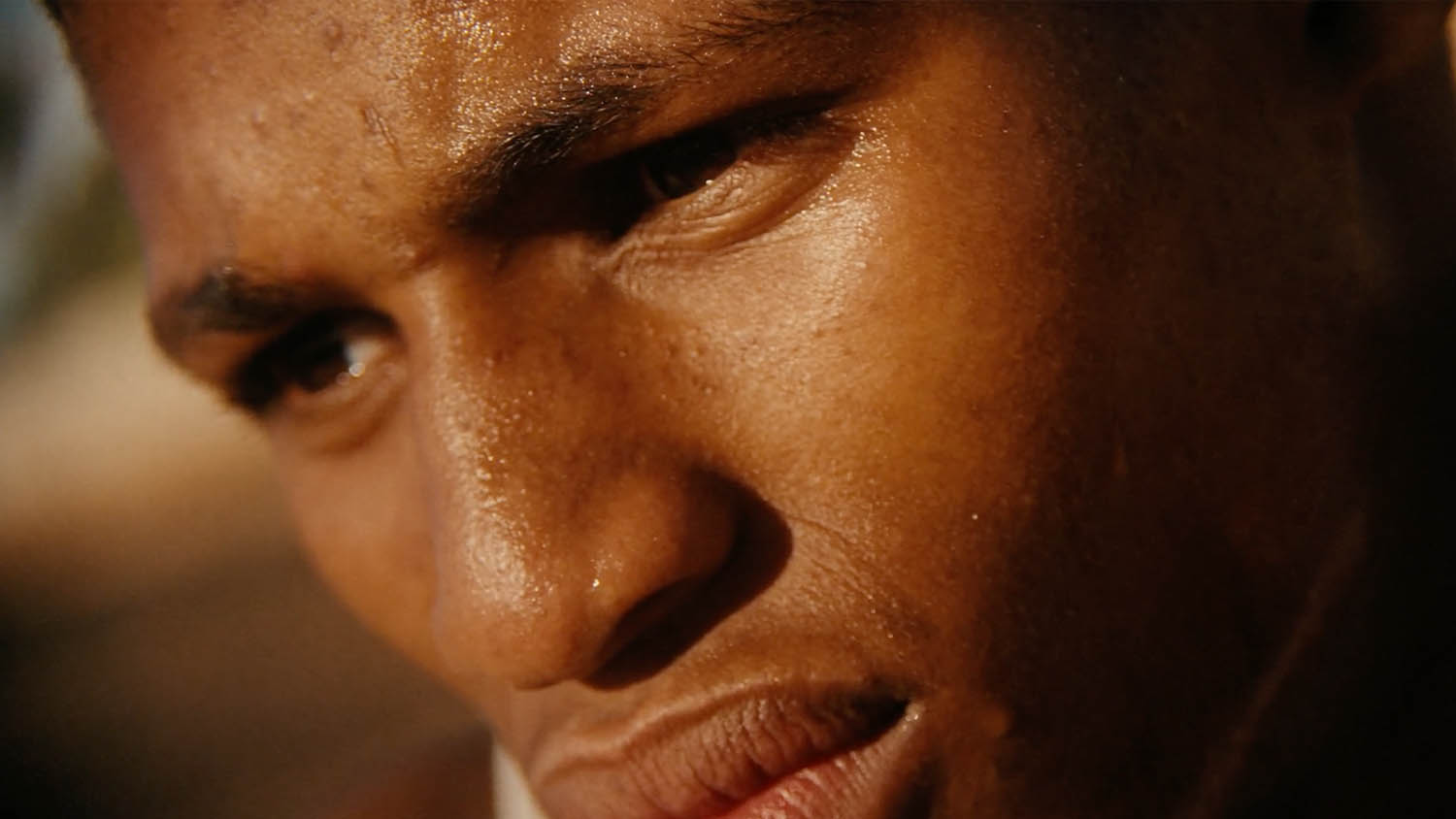
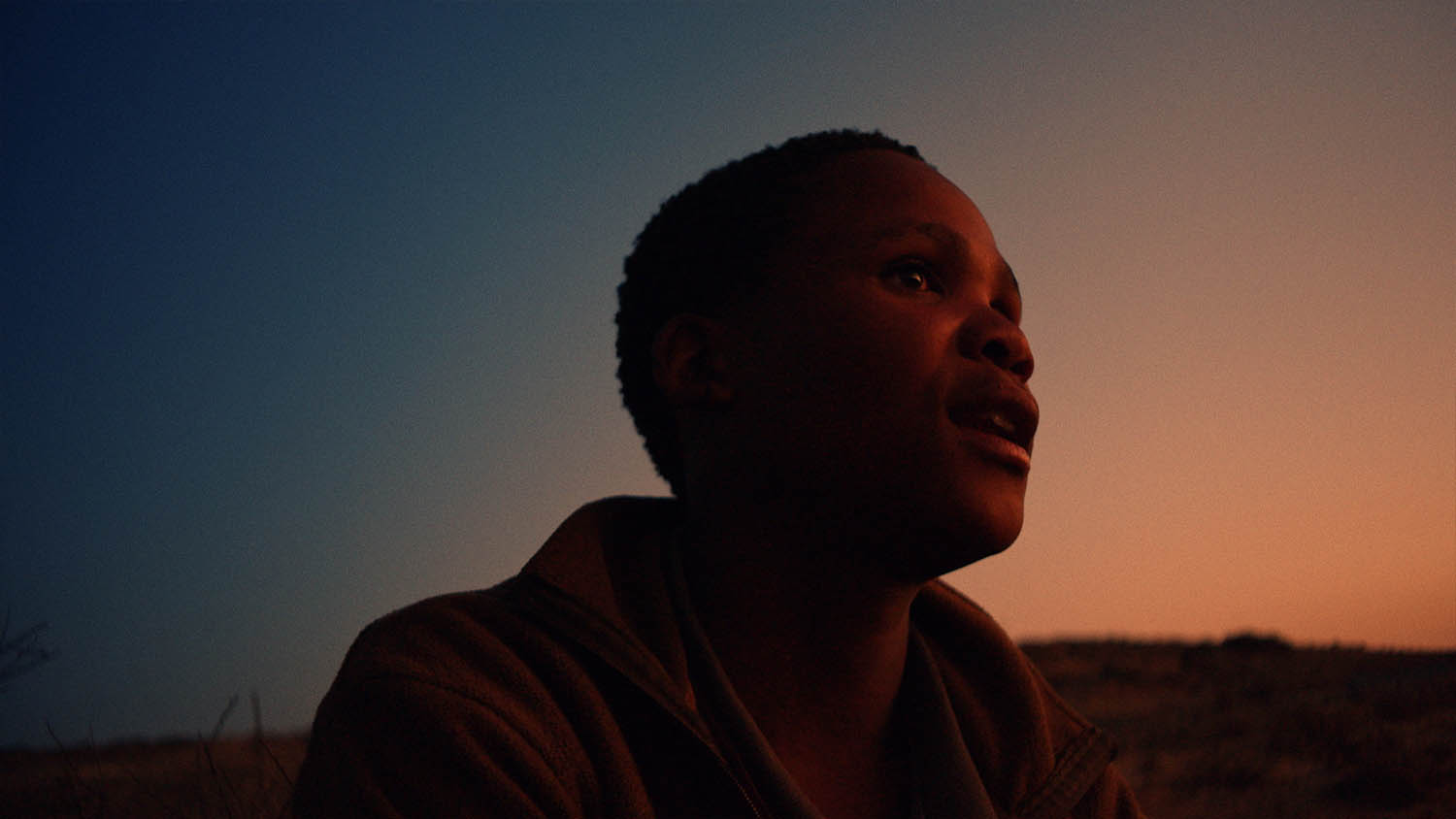
Paul: Filming the live race was definitely the most difficult, multiple camera teams, over 3,4km from tracking vehicles to drones and only one chance to get it was crazy. But the moment we found the film’s heart was definitely when we met Romeo in his dusty track, we had heard rumours of a child who builds his own track just outside the town, but we could never have imagined we would meet such a special young man, and that he would open up to us like he did. It’s a moment and memory that will live within me forever.
Q: If you had to summarise the film’s spirit in one line, what would it be now that the project is complete?
Paul: Somewhere in the process of this film I came across the Walt Disney quote “If you can dream it, you can do it.” I would alter it to say, “If children can dream it, they can do it.”
Wanna (s)talk some more? Giant Film’s IDIDTHAT profile and company website.
Contact Giant Films
Executive Producer / Partner: Cindy Gabriel
cindy@giantfilms.tv
+ 27 83 601 1511
Executive Producer / Partner: Emma Lundy
emma@giantfilms.tv
+ 27 83 309 3630
View IDIDTHAT Profile
View Website
Produced by the IDIDTHAT Content Studio
Credits: Anne Hirsch (Writer) / Julie Maunder
This content may not be reproduced, distributed, or used in any form without prior written consent from IDIDTHAT. Reprints must credit IDIDTHAT.co as the original publisher and include a live link to ididthat.co.
This editorial was commissioned by Giant Films.
Want the industry to pay attention to your production company, agency, brand, or the work you’re proud of? The IDIDTHAT Content Studio partners with you to thoughtfully and strategically shape your narrative.