
It’s not you, it’s your treatment: How top ad Creatives pick their directors.
Q&A with Steph van Niekerk, ECD at TBWA\Hunt Lascaris
Steph van Niekerk is one of the most awarded creatives to come out of South Africa. Full stop. With multiple Cannes Lions (including the country’s first Creative Effectiveness Lion and Digital Craft Lion), a One Show Gold Pencil (also a first for SA), Grand Prix Loeries, D&AD Pencils, Clios, Andys, and even a TED talk, she’s written her way into the history books… often by rewriting her own scripts ten times over. She’s currently Executive Creative Director at TBWA\Hunt Lascaris Joburg, where her work continues to set the standard for our industry.
In this interview, Steph takes us behind the scenes on how she and her team approach one of the most crucial parts of the production process: selecting directors to treat on a script. From how she vets wishlists, what she looks for in a treatment, to the red flags that raise eyebrows, this is a must-read for any director who wants to get in the room and stay there.

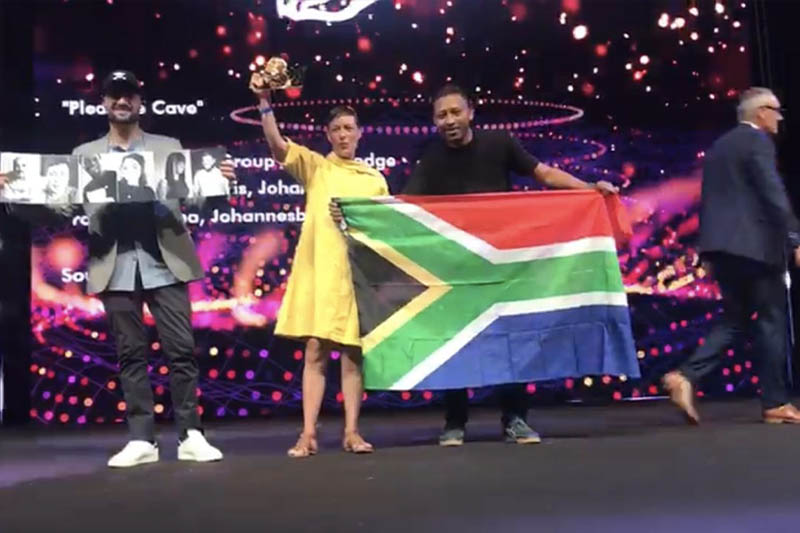
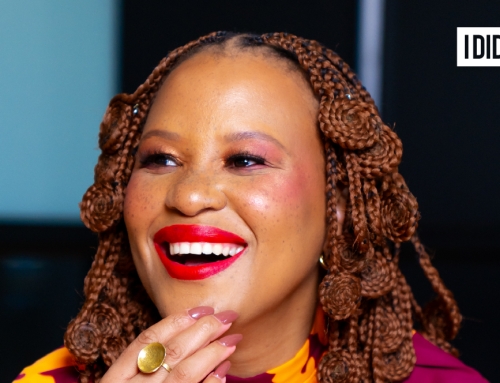
L-R: Steph is no stranger to winning at Loeries. One year she went on stage 13 times to collect Gold / At Cannes Lions 2019, she racked up 24 shortlists across three campaigns. Here she is accepting Gold.
Selecting a director to treat on your work
Q: How do you personally like to work with directors?
Steph: The best working relationships are always built on mutual trust and respect. I’m grateful to have authentic friendships with several of my favourite directors and producers, and this allows for open and honest collaboration. It means we can challenge each other and keep each other accountable to create the best possible work based on the board. Some of my best work was the result of a director telling me my script was kak (yes, Kim Geldenhuys once made me rewrite a script ten times but I’m so glad he did). It’s in this collaborative process that magic happens.
Q: How involved are ECDs and creative teams in choosing the director for a project?
Steph: Generally how it works is that I’ll ask the team to put a list together of their favourite people for the job. I’ll then meet with them and ‘vet’ the list, based on experience and skillset. We’ll generally settle on a shortlist we all feel comfortable and excited about.
Q: How do you typically go about selecting the directors you’d like to treat on a campaign?
Steph: First we look at the type of board and what it demands – is it comedy, is it a look-thing, performance? Is it a very technical piece that involves a lot of post? We’ll then match the directors to the job based on what we know they’re good at or the work on their reel. Budget also plays a part. We have to be realistic from the outset on which production houses will be willing to look at a board for our given budget and timelines. Sometimes it’s an opportunity to work with young up and comers. I do enjoy discovering new talent this way. We generally take director selection very seriously. Lord knows how hard it is to get a script out into the world and approved, so when it comes to making it we all want to do whatever it takes to make sure the end product is bloody great.
Q: Can you quickly walk us through the steps of selecting a director, from script to final decision?
- Script approval.
- Team puts together a wish list of directors.
- I review with them and together we select a shortlist of three (or single bids on rare occasions).
- We then send the shortlist to client along with their reels.
- Clients give us the thumbs up.
- Brief the chosen directors as thoroughly as we can with scripts, references, brand guardrails – whatever will be useful to them in the treatment process.
- We see the three treatments.
- After some robust discussions, the team and I will select our preferred director.
- The winning director will then present their treatment to client.
- If all goes well and client approves, it’s all systems go and we award the job.
Q: What are the red flags? What should a director never do in their treatment that immediately puts you or the team off?
Steph: Comic Sans in a treatment presentation is a complete deal-breaker. 😂 No seriously. One can tell very quickly if someone has put proper love and time into a treatment or if they have just thrown it together the night before. The treatment is a barometer of how seriously the director will take the job. It’s also the only concrete thing we have to substantiate our choice to the client. It makes it a very tough sell if the treatment has been thrown together haphazardly. Also, don’t just give us back what we gave you. We love a director with a strong POV. Someone who brings ideas to the table to make it even better.
Q: What, for you, makes a great director’s treatment?
Steph: A great treatment is thorough. It unpacks the director’s vision in a clear and succinct way. It brings the idea to life in a way we’ve never even considered. It gets everyone in the room excited. You can feel it.
What you’re looking for in a treatment
Q: How do you weigh up the design, layout, and writing versus the thinking and presentation?
Steph: Obviously the thinking and approach is most important, but how it’s presented should make us feel that the director’s heart is in it.
Q: How detailed is too detailed? Do you read every word or scan for key points? Where’s the sweet spot?
Steph: It’s definitely about quality over quantity. Add as many details as you need in order for us to see, understand and buy into your vision.
Q: Any advice for directors putting together a treatment specifically for your agency or client? Any do’s and don’ts that come up again and again?
Steph: Just make sure you spell the brand’s name correctly.😂 Also, if you don’t have the right logos just ask. These things make a massive impression on the clients.
Deciding on a director
Q: When choosing a director, what’s most important to you? Craft, originality, attitude, communication – what tips the scales?
Steph: Originality, craft and an openness to bring people along on a journey. No doubt, the process isn’t always easy and there is bound to be a spanner or two along the way. The best directors stay true to their vision but also have a measure of flexibility, adaptability and a solution-orientated mindset.
Q: When a director is presenting their treatment what do you want from them in that moment?
Steph: Know that if we have chosen you to treat we live in awe of your talent. We chose you because of it. We want to hear your perspectives, your takes, your ideas. Don’t tell us what you think we want to hear. Tell us what you truly believe.
Final thoughts
Q: How do you feel about backing up-and-coming directors versus going with proven, safe hands?
Steph: There’s a time and place for both. Smaller jobs is a great way to get to know up and coming directors. It’s all about relationships and trust. Once we have established it with a director we tend to work with them over and over again. Sometimes there’s so much at stake with a job, you can’t take a risk and so you’ll default back to the established directors who you’ve worked with before. What we try and do is to try and have one ‘new’ or wild card director in the mix when we pitch a job out. We have discovered so many great young people that way.
Q: What do you wish more directors understood about working with agencies and clients?
Steph: I wish they knew how hard it is even to get to a signed off script. By the time we get there is about a million keynotes and a million hours of meetings later. There will be things that are immovable. There will be things that aren’t. Most of the time it’s a matter of give and take.
Q: What excites you about the next generation of commercial directors?
Steph: These guys are culturally connected, they know what makes content sticky (thanks TikTok) and because they have entered the industry long after the grand budgets of the good old days, they find interesting ways to make the money work.
Produced by the IDIDTHAT Content Studio
Credits: Anne Hirsch / Julie Maunder
This content is the property of IDIDTHAT.co and may not be reproduced in any form without prior written consent. All reprints must credit IDIDTHAT.co as the original publisher and include a direct link to this site.
If you’d like us to create editorial content, help you strategise your publicity, or put your work in the spotlight, get in touch. Explore our editorial packages or contact julie@ididthat.co Let’s get your work seen. #Boom